Alex and Priya, an illustrative Sydney household, sit down with three solar quotes after another electricity bill arrives. The panels look similar, but the inverter recommendations don’t. One installer suggests a string inverter, another recommends hybrid, and the third proposes microinverters. “Why are we getting three different answers?” Priya asks.
For homeowners researching solar inverter installation in Sydney, that confusion is understandable. Each option solves a different problem, and the right choice depends on the property. Through this household’s example, we’ll explore what matters before you commit. Greenvoy Energy offers a starting point for discussing those choices against your roof, budget and electricity habits.
What Does a Solar Inverter Do?
A solar inverter converts the direct current electricity generated by your panels into alternating current used by household appliances. Without that conversion, rooftop generation cannot supply your home circuits. It’s an essential part of the system.
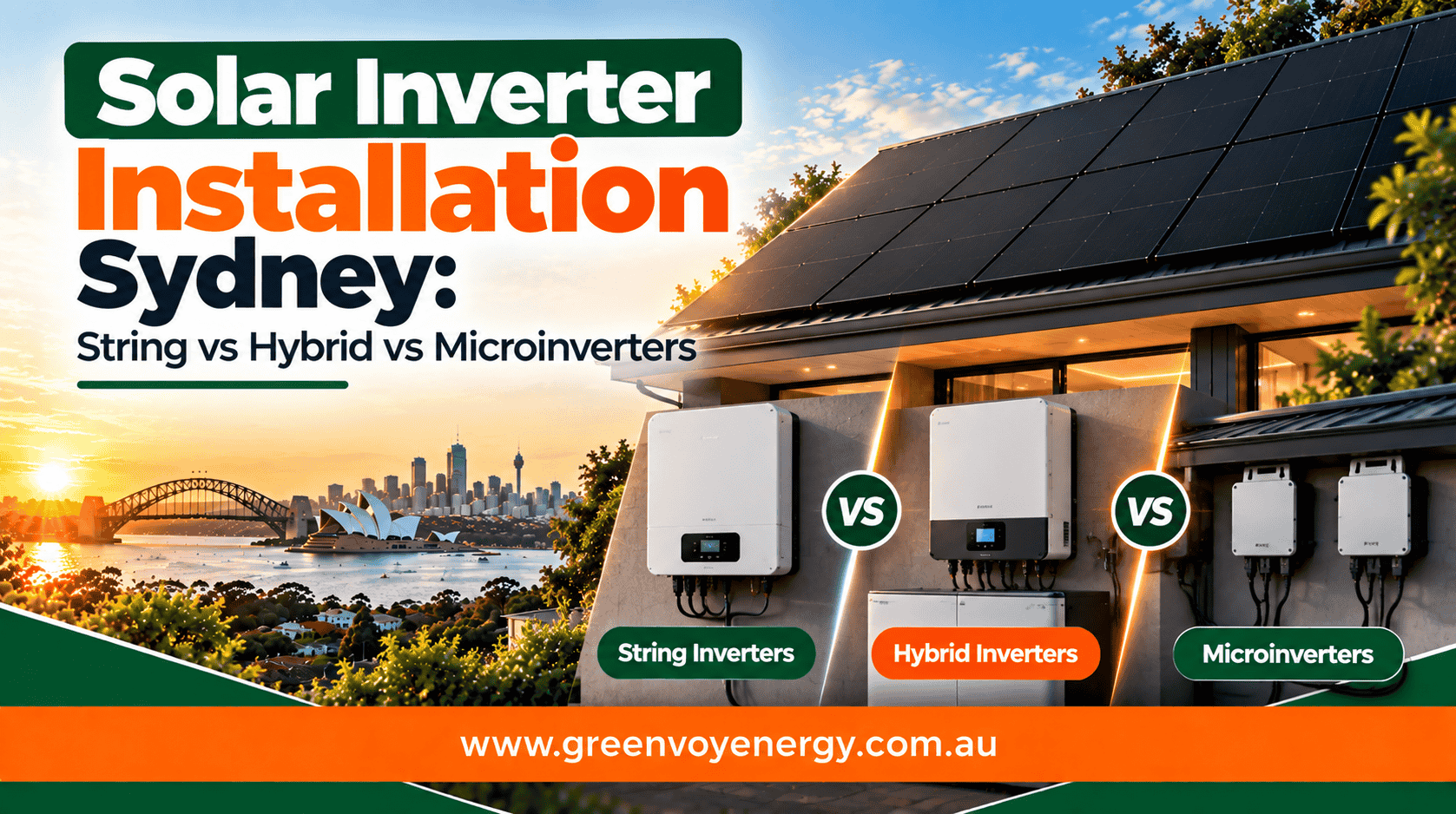
Here’s the distinction that makes comparing quotes easier: string and microinverters describe how electricity conversion is arranged across the panels. Hybrid describes battery management capability, and a hybrid inverter commonly connects to strings of panels too. Explore Greenvoy Energy’s solar inverter options.
String Inverters: A Sensible Choice for Straightforward Roofs
Alex’s first quote includes groups of connected panels feeding a central string inverter. For a simple, largely unshaded roof, this can be a practical, economical arrangement. String inverter installation generally costs less than a comparable microinverter system, although the complete installed quote matters more than equipment price alone.
Modern string inverters can have multiple maximum power point trackers, or MPPTs. These allow appropriately designed panel groups to operate under different conditions, such as east-facing and west-facing roof sections. The number of trackers and their electrical limits determine how much flexibility a model offers.
Shade needs assessment rather than assumptions. One shaded panel doesn’t necessarily reduce every panel’s output equally; bypass diodes, string layout and inverter shade management influence the result. Alex’s better question is, “How will this design perform on our roof?” Greenvoy Energy’s solar panel services provide a useful starting point for discussing panel placement alongside inverter selection.
Hybrid Inverters: Planning Solar and Battery Storage Together
Priya notices something the quotes haven’t addressed: their household uses plenty of electricity after sunset. Dinner, laundry and cooling often happen together. A hybrid solar inverter becomes worth investigating because it manages solar generation and compatible battery storage through one unit, allowing surplus daytime generation to be stored for later use.
Hybrid inverter installation in Sydney deserves consideration when solar and a battery are planned together. However, “battery ready” shouldn’t end the discussion. Ask which battery models are compatible, whether activation charges apply, and what additional work would be required if storage is installed later. Compatibility is specific to the equipment.
Backup also needs explaining. A hybrid inverter alone doesn’t guarantee power during a blackout; the battery, switching equipment, system configuration and selected circuits all matter. Keeping the fridge and lights running differs from supporting the entire house. Greenvoy Energy’s solar battery installation options can help guide a conversation about storage and backup priorities.
Microinverters: Independent Operation for Individual Panels
Now consider a variation: Alex and Priya’s roof has several small sections, with afternoon shade crossing one corner. Microinverters become worth comparing because they typically sit beneath individual panels and convert electricity at panel level. Each panel operates independently, which can help when sunlight conditions vary across the roof.
Microinverter installation in Sydney can suit mixed roof orientations and partial shading, but it cannot replace sunlight blocked by a tree. Ask for a comparison of expected generation and installed costs. The extra expense should answer an identifiable need, rather than simply sounding like an upgrade.
Panel-level monitoring is another attraction. With suitable monitoring equipment, individual panel data can help reveal an underperforming section. The trade-offs include typically higher upfront costs and potential roof-access costs for replacement. Microinverters can also work with compatible AC-coupled batteries, so future storage remains possible with the right integration plan.
String vs Hybrid vs Microinverters: Which Suits Your Home?
Alex and Priya can now compare the options against practical needs. A straightforward roof makes a string system worth assessing, a definite battery plan brings hybrid capability into focus, and varied roof conditions warrant a closer look at microinverters. These are starting points for assessment, rather than automatic recommendations.
| Option | Main reason to consider it | Important question |
| String inverter | Economical conversion for a straightforward roof | How will the design handle shade and orientation? |
| Hybrid inverter | Integrated solar and compatible battery management | Which batteries and backup arrangements are supported? |
| Microinverters | Independent operation across individual panels | Does the expected benefit justify the additional cost? |
What Affects Solar Inverter Installation Cost in Sydney?
Compare quotes that cover the same scope. Ask for the exact inverter model, capacity, monitoring equipment, electrical work and warranty terms. A single-phase inverter or three-phase solar inverter needs assessment against your property’s electricity supply, proposed system and applicable network requirements.
Roof access, cable routes, switchboard upgrades and battery integration can change the total. For solar inverter replacement in Sydney, existing panel compatibility and installation conditions also need checking. Request a written explanation of the proposed work, including exclusions and after-sales support, before choosing on price.
Installation and Monitoring With Greenvoy Energy
A site assessment helps confirm access, equipment positioning and additional electrical work. The applicable network connection process should be addressed before installation. At handover, ask for documentation, a monitoring demonstration and guidance on expected seasonal performance.
Greenvoy Energy’s active solar monitoring service is worth discussing when planning ongoing support. Monitoring helps you understand generation patterns and investigate faults, rather than relying on the electricity bill alone.
Final Thoughts: Choose Your Inverter With Greenvoy Energy
Alex and Priya’s decision becomes clearer once the conversation moves from equipment labels to household needs. Their roof conditions, evening usage and battery plans give each recommendation context.
For solar inverter installation in Sydney, Greenvoy Energy can be your starting point for discussing a suitable system. Bring your electricity bill and future plans, then request a solar quote that explains the proposed inverter arrangement.
Frequently Asked Questions
Q1. What Is the Best Solar Inverter for a Sydney Home?
There’s no universal winner. Roof conditions, electricity use, battery plans, installed cost and support all matter. Ask your installer to explain the recommendation using your property’s assessment.
Q2. Can I Add a Battery to an Existing String Inverter?
Often, yes, using a compatible AC-coupled battery arrangement. An assessment should confirm whether keeping the existing inverter is practical and what additional equipment is needed.
Q3. Are Microinverters Better for Shaded Solar Panels?
They can reduce the impact of uneven shading through independent panel operation. However, they cannot recover blocked sunlight, and a well-designed string system may also handle partial shade effectively.
Q4. Does a Hybrid Inverter Provide Blackout Protection?
Only when the system includes suitable backup equipment and configuration. Confirm which circuits can operate, the available power and whether backup features are included in your quote.
Q5. How Do I Request an Inverter Quote From Greenvoy Energy?
Use Greenvoy Energy’s online quote form and share your address, electricity needs and battery plans. Mention existing solar equipment if you’re considering an inverter replacement.


Leave a comment