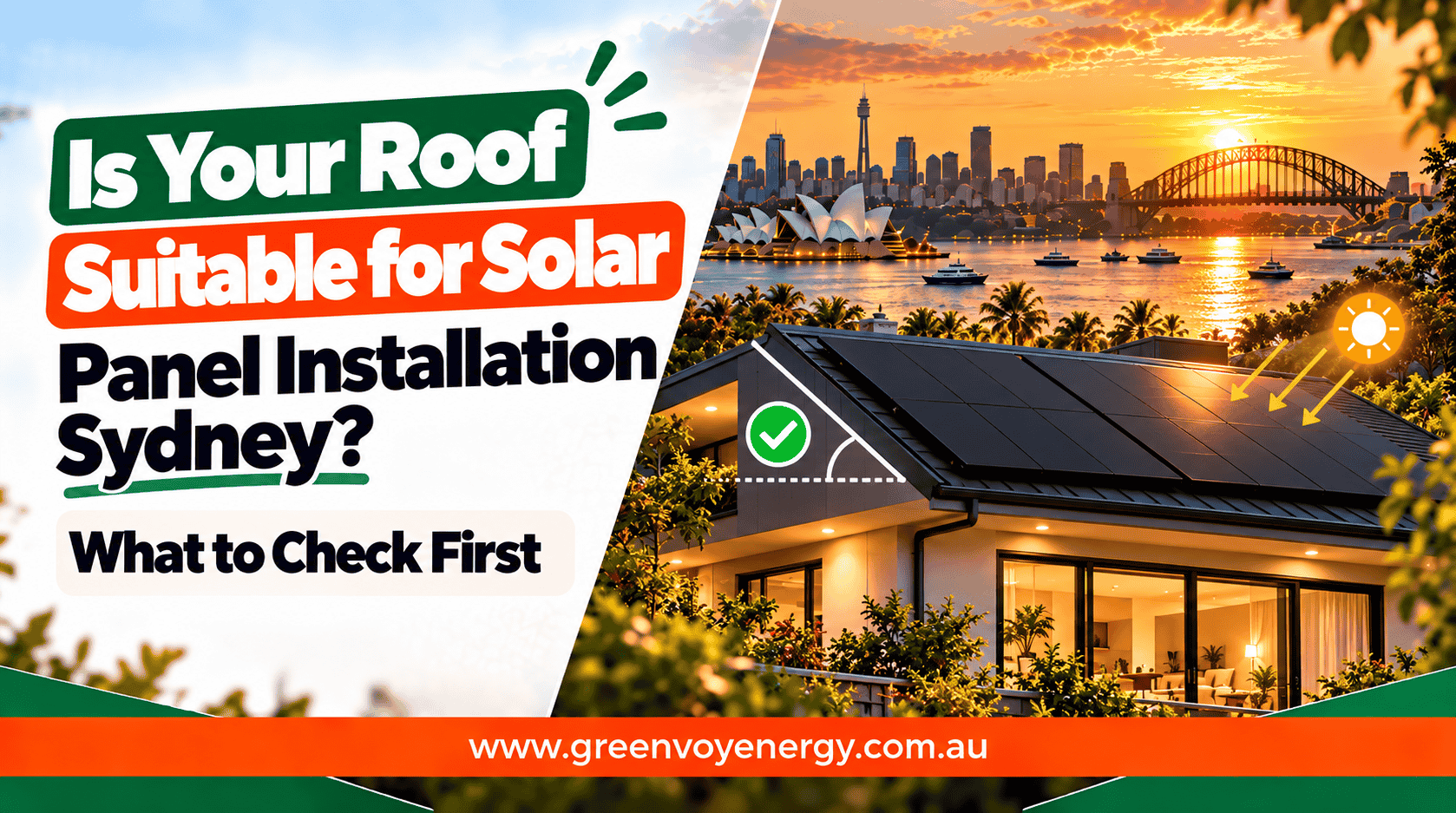
From the driveway, Sophie’s roof looked perfect for solar. It was broad, mostly clear and bathed in sunshine when she came home for lunch.
Then she remembered the cracked tiles repaired last winter and the neighbour’s tree that shaded one corner each afternoon. Was the roof ready, or was she getting ahead of herself?
Sophie is an illustrative homeowner, but her questions are worth asking. Before booking Solar Panel Installation Sydney, assess the roof alongside the proposed equipment. Greenvoy Energy offers a starting point for discussing panel layouts, property conditions and the checks needed before a final installation plan.
Start with roof condition, not panel numbers
A roof needs to remain dependable after solar equipment is fitted. Ask a qualified professional to investigate leaks, deterioration or suspected structural problems before committing to a layout.
Tell your solar provider about previous repairs, storm damage and any planned roof replacement. Australian Government guidance recommends completing foreseeable roof repairs or replacement before panels are installed.
Sophie’s repaired tiles might require no further work. Equally, a closer inspection might reveal a problem worth resolving first.
Discuss the findings with Greenvoy Energy before comparing packages. A quote that overlooks necessary repairs can leave you comparing very different project costs.
Check the roof structure and mounting approach
Roof covering and roof structure are different things. Tiles or metal sheets form the surface, while the supporting structure must be suitable for the proposed mounting arrangement.
Ask who assesses that suitability and whether a structural engineer’s advice is needed for your property. Provide available building plans, details of extensions and information about earlier alterations.
For residential solar panels Sydney, request an explanation of the mounting system and the surfaces it is designed for. If the proposal changes after inspection, obtain the updated scope in writing. Greenvoy Energy should have relevant property information available when discussing a suitable design.
Understand your roof material
Metal and tiled roofs can accommodate solar, but the installation method needs to match the roof. Flat roofs with waterproof membranes also require care around fixing and sealing arrangements.
Ask how penetrations, flashings and any damaged tiles will be handled. Clarify which responsibilities sit with the roofer and which belong to the solar installer.
If asbestos-containing material is suspected, obtain professional advice before anyone disturbs it. SafeWork NSW identifies asbestos exposure and fragile roof surfaces among rooftop solar installation hazards.
Share known roof information with Greenvoy Energy early. Aerial images alone cannot settle every question about material condition or installation readiness.
Roof direction affects when electricity is generated
North-facing panels generally produce the highest total generation. East-facing sections receive useful morning sunlight, while west-facing sections contribute later in the day. South-facing areas need careful assessment, particularly on steeper roofs.
However, the most useful layout also depends on when your household consumes electricity.
Sophie works from home twice a week and often runs appliances in the afternoon. That routine belongs in the discussion alongside compass direction.
Explore Greenvoy Energy’s solar panel solutions with your electricity bills available. Ask why the proposed roof sections were chosen and how the generation pattern fits your household.
Look beyond a single sunny photograph
Shade can move across a roof as the day progresses, and its pattern changes through the seasons. Trees, neighbouring buildings and rooftop obstructions can all influence the proposed layout.
Ask for the shading assumptions behind the generation estimate. A summer photograph taken at noon should not be treated as a complete picture of annual conditions.
Discuss foreseeable changes too, such as tree growth or a planned nearby extension. Avoid assuming vegetation can simply be removed; obtain appropriate advice before planning any tree work.
Greenvoy Energy can be your point of contact for discussing how these conditions affect panel positioning and equipment selection.
Measure usable roof space accurately
The apparent size of the roof is not the same as the area available for panels. Vents, skylights, roof geometry and required installation clearances can reduce the usable layout.
Ask for a drawing based on the exact panel dimensions, showing the proposed quantities and placement. Higher-wattage panels may also be physically larger, so wattage alone does not tell you what will fit.
For Solar Panel Installation Sydney, compare layouts rather than generic roof-area promises. A good proposal should make clear which sections are being used and which have been excluded. That helps you understand how the recommended system size was reached. Save these details alongside your other project documents.
Pitch and access can change the installation
A flat roof is not automatically unsuitable, and a pitched roof is not automatically straightforward. Ask how the mounting arrangement suits the slope and how the crew will access the work area.
SafeWork NSW advises considering the roof’s slope, height and condition, along with skylights and fragile roofing materials, when planning a solar installation.
Restricted side access or a double-storey property may require different arrangements from a readily accessible single-storey home.
Ask Greenvoy Energy whether access requirements are included in the quote. Leave rooftop inspection to qualified people; homeowners can provide photographs and documents without climbing onto the roof themselves.
Check planning, heritage and shared ownership
Solar installations in NSW may qualify as exempt or complying with development when the applicable requirements are met. That does not establish the approval pathway for every property.
Heritage status, conservation controls and other site conditions need checking before relying on an exemption. Heritage NSW provides specific guidance for solar installations affecting State Heritage Register properties.
If the roof is shared or strata-managed, establish the necessary permissions before finalising the project.
Discuss approval responsibilities with Greenvoy Energy. Ask who checks the relevant requirements and what documentation is needed. A suitable physical roof still needs a lawful, agreed installation pathway.
Roof suitability is only part of the assessment
Sophie’s roof could be suitable while other parts of the property require work. The switchboard, inverter location, cable routes and grid connection arrangements deserve attention too.
Australian Government guidance recommends a site visit when comparing proposals because it can reveal access, shading, switchboard and equipment-location complications.
Explore Greenvoy Energy’s solar inverter options alongside the roof layout. If storage is planned, discuss solar battery solutions and installation requirements early.
A complete proposal should connect these decisions. A large panel array is only useful when the wider system is properly designed around the property and household.
What should your roof assessment produce?
The assessment should leave you with clear answers about the proposed layout, necessary repairs, mounting approach and any further professional checks.
Request the exact equipment list, generation assumptions, installation scope and exclusions. Clarify how unexpected roof issues would be managed and approved.
Ask Greenvoy Energy about workmanship terms, responsibility for roof-related concerns and the handover documents supplied. Keep copies of the agreed design and any changes.
After installation, discuss active monitoring so you understand the available performance information. Confirm the features included and any ongoing costs rather than assuming every monitoring arrangement provides the same service.
Final Thoughts: Make the roof part of the decision
Sophie does not need a perfect-looking roof. She needs reliable advice about its condition, usable sunlight and suitability for the proposed mounting system.
For Solar Panel Installation Sydney, Greenvoy Energy offers a starting point for reviewing those questions alongside your energy needs and budget.
Request a quote from Greenvoy Energy with your property details, electricity bills and known roof history. Ask what needs checking before you commit to equipment or an installation date.
Frequently Asked Questions
Q1. Can solar panels be installed on a tiled roof?
Yes, where the roof and supporting structure are suitable. The installer must select an appropriate mounting method and assess the roof’s condition.
Q2. Does my roof have to face north?
No. East and west roof sections can also be useful. Ask how each orientation affects generation and matches your electricity use.
Q3. Should I replace an ageing roof before installing solar?
Have its condition assessed first. If repairs or replacement are needed soon, completing that work before solar may avoid later removal and reinstallation.
Q4. Can a partly shaded roof still suit solar?
Potentially. The extent, timing and seasonal pattern of shade need assessment. Request a generation estimate reflecting the actual conditions.
Q5. Can Greenvoy Energy help assess my options?
Contact Greenvoy Energy to discuss your property and proposed solar layout. Ask which roof checks and specialist advice are needed before installation.

Leave a comment