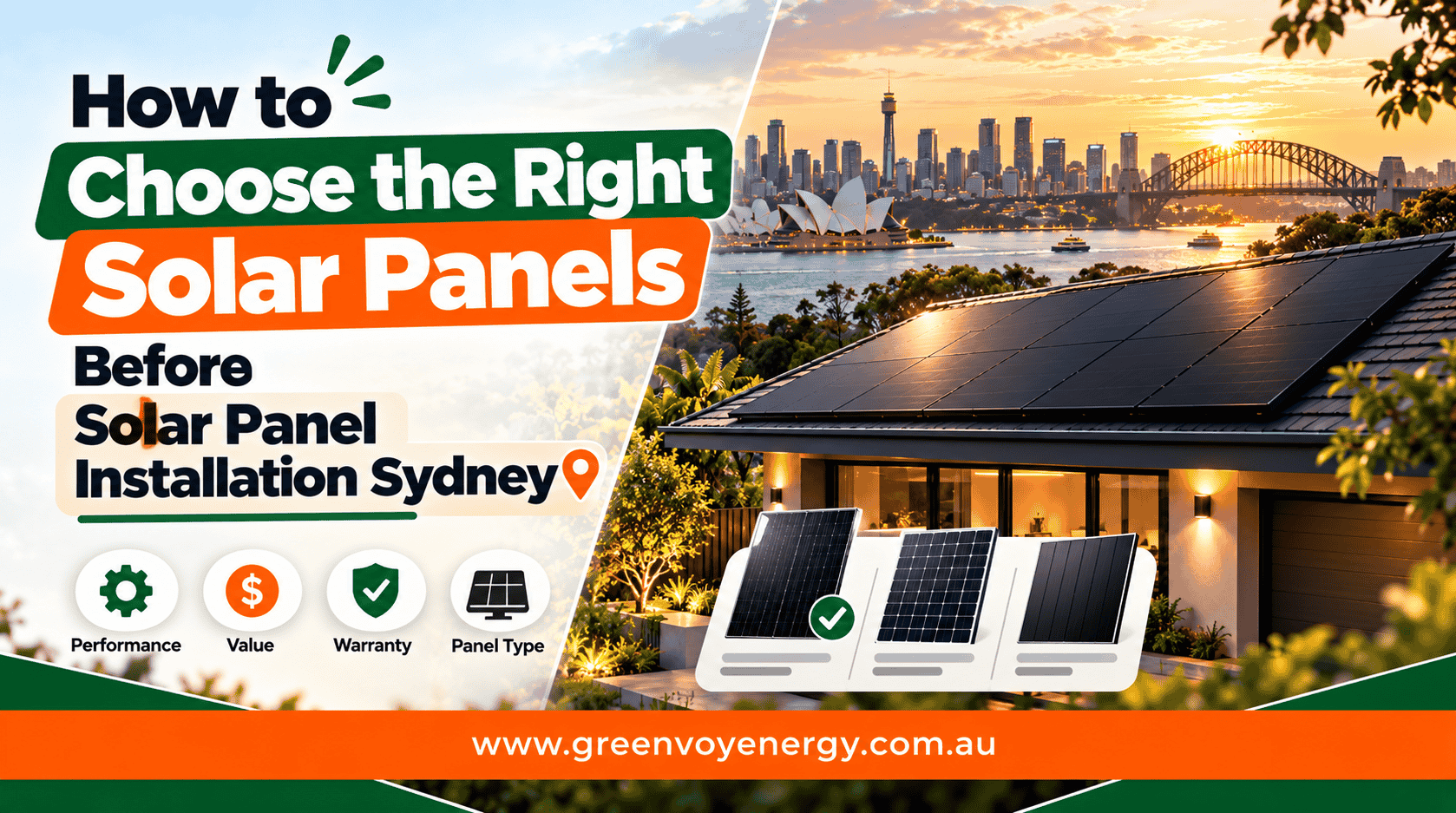
Emma thought choosing solar panels would take one evening. She opened three quotes at her kitchen table, expecting the differences to be obvious. Instead, she found unfamiliar model numbers, different wattages and warranty promises that sounded almost identical.
One package was cheaper. Another offered more panels. The third mentioned premium technology without explaining what it would change for her home.
Emma is fictional, but the confusion is familiar. Before booking Solar Panel Installation Sydney, it helps to understand what you are comparing. Greenvoy Energy gives homeowners a place to discuss panel options alongside the practical details of their property, budget and electricity use.
Start with your electricity habits
Emma initially focused on her quarterly bill. Then she noticed something more useful: most household activity happened before work and after school. Her dishwasher, washing machine and air conditioner did not follow the same schedule every day.
Gather twelve months of bills and, where available, smart meter data. Ask how the proposed design relates to when your household actually uses electricity. The Australian Government recommends considering both current consumption and future needs when designing rooftop solar.
Tell Greenvoy Energy about realistic changes, such as working from home or buying an electric vehicle. Those details make a residential solar discussion more useful than simply asking for the biggest package.
Understand panel wattage and efficiency
Wattage describes a panel’s rated power under standard test conditions. It does not promise that output throughout the day. Efficiency describes how much incoming sunlight becomes electricity; higher efficiency can help when usable roof space is limited.
For a simple example, fifteen 440 W panels total 6.6 kW of rated panel capacity. That calculation describes the array size, not its daily electricity production.
Ask for the exact panel dimensions alongside wattage. A larger panel may have a higher rating partly because it occupies more space. The useful comparison is what fits your roof and what the complete design is expected to generate.
Let the roof shape your shortlist
Emma’s roof looked spacious from the driveway. The proposed layout revealed a different picture: several roof sections, a vent and a tree that cast afternoon shade.
North-facing panels generally maximize total generation, while east-facing panels produce earlier and west-facing panels later. Shading changes throughout the day and across seasons, and the roof’s condition should be checked before installation begins.
When reviewing Greenvoy Energy’s solar panel solutions, ask for a property-specific layout. Ask which roof sections are unsuitable, how shading has been assessed and whether any repairs are needed before installation. A clear drawing makes the proposal easier to understand.
Compare the exact model, not just the brand
A familiar logo can narrow your research, but manufacturers sell different product ranges. Two quotes carrying the same brand name may specify panels with different dimensions, ratings and warranties.
The Clean Energy Council maintains an approved PV module list. Confirm that the specific model remains on the approved list, as listings may be suspended or withdrawn. Approval is a useful requirement check, rather than a complete assessment of suitability for your home.
Greenvoy Energy lists AIKO and Jinko Solar on its solar panels page. Ask which specific model is being proposed and request its datasheet. Keep that document with your quote so any later product substitution can be assessed properly.
Look beyond “premium” panel descriptions
Emma’s premium quote became easier to assess once she asked a direct question: what benefit was she paying extra for?
A useful answer might explain how a particular panel improves the proposed roof layout or offers warranty terms she values. A vague claim about superior technology gives her much less to compare.
A manufacturer’s “Tier 1” status does not, by itself, indicate the quality of each panel it produces. Australian Government guidance explains that manufacturer tier systems consider business characteristics and do not measure the quality of each model.
Ask Greenvoy Energy to explain any upgrade in practical terms. The additional cost should have a reason you understand.
Consider heat performance without chasing one number
Sunshine supports solar electricity production, although cells typically become less efficient as their temperature rises under similar light conditions. That is why heat performance deserves attention alongside the headline wattage.
Ask how the proposed panels’ temperature characteristics have been considered in the generation estimate. Avoid choosing a product solely because one specification looks slightly better.
Emma did not need to become a solar engineer. She needed an explanation connecting the datasheet to her roof. That is a reasonable expectation when comparing solar panels for Sydney homes, especially where two packages appear similar in price.
Read the warranties as separate promises
A solar panel product warranty addresses defects, while a performance warranty sets conditions around retained output over time. Installation workmanship is another separate area. These promises also sit alongside Australian Consumer Law rights.
Before accepting a proposal, clarify who handles a claim and whether testing, labour, freight or replacement installation are covered. Read exclusions and the process for demonstrating a problem.
Greenvoy Energy’s solar panels page advertises a ten-year workmanship warranty. Request the written terms applicable to your installation. Knowing how support works is more useful than relying on a large warranty number in an advertisement.
Make sure the inverter suits the design
Panels work within a system. Inverter selection affects how the proposed roof sections and electrical configuration fit together, particularly where orientations or shading differ.
Explore Greenvoy Energy’s solar inverter options alongside the panel proposal. Ask why that inverter was selected and what assumptions support the expected generation.
If a battery is on your shortlist, discuss solar battery storage now. Future compatibility needs a clear explanation; a casual “battery ready” label leaves too much unanswered.
Compare installation quotes on the same basis
Emma’s cheapest quote stopped looking directly comparable when she checked what was included. The other proposals described more of the installation work.
Use this checklist to make your own comparison clearer.
| Quote detail | What to confirm |
| Panels | Exact model, quantity and rated capacity |
| Design | Roof layout and generation assumptions |
| Electrical work | Inverter, switchboard work and exclusions |
| Installation | Access costs, mounting and responsibilities |
| Support | Warranty terms and claim contact |
For Solar Panel Installation Sydney, request the complete price, any conditional discounts and the payment schedule. Ask Greenvoy Energy to explain variations before signing. A useful quote makes the scope understandable.
Keep a copy of every version of the proposal. If the panel model changes, ask for an updated layout, datasheet and warranty before approving it. That small step helps ensure the equipment delivered matches the system you understood when you agreed to the purchase.
Check credentials and plan the handover
For systems claiming small-scale technology certificates, the Clean Energy Regulator requires appropriately accredited designers and installers, with relevant licensing requirements. Confirm those details for the people responsible for your project.
Also agree on the documents you will receive, including equipment details, warranties and operating instructions. Ask how to view the generation and who to contact if something looks wrong.
Greenvoy Energy’s active monitoring service offers another topic to discuss. Clarify the included features and any ongoing costs.
Final Thoughts: Choose panels with the whole system in mind
By the end of her comparison, Emma had a better question than “Which panel is best?” She wanted to know which proposal suited her roof, household and budget.
That is a useful approach to Solar Panel Installation Sydney. Compare exact models, understand the layout and read the support terms before making a decision.
Request a quote from Greenvoy Energy with your electricity bills and property details. Ask for a clear explanation of the recommended panels and complete installation scope.
Frequently Asked Questions
Q1. Are higher-wattage solar panels always better?
No. Consider physical size, efficiency, roof fit and the complete system design. Higher wattage alone does not establish better value.
Q2. How many solar panels will my Sydney home need?
The number depends on panel wattage, usable roof area and your energy needs. Request a design based on your household.
Q3. Can panels work on an east-facing roof?
Yes. East-facing panels can be generated earlier in the day. Ask how that generation pattern matches your electricity use.
Q4. Does a performance warranty cover every fault?
No. Performance and product warranties address different issues. Read both documents, including exclusions and claim requirements.
Q5. How can Greenvoy Energy help me choose?
Greenvoy Energy offers solar panel solutions. Discuss your roof, consumption, budget and future plans to understand the proposed installation.
Leave a comment