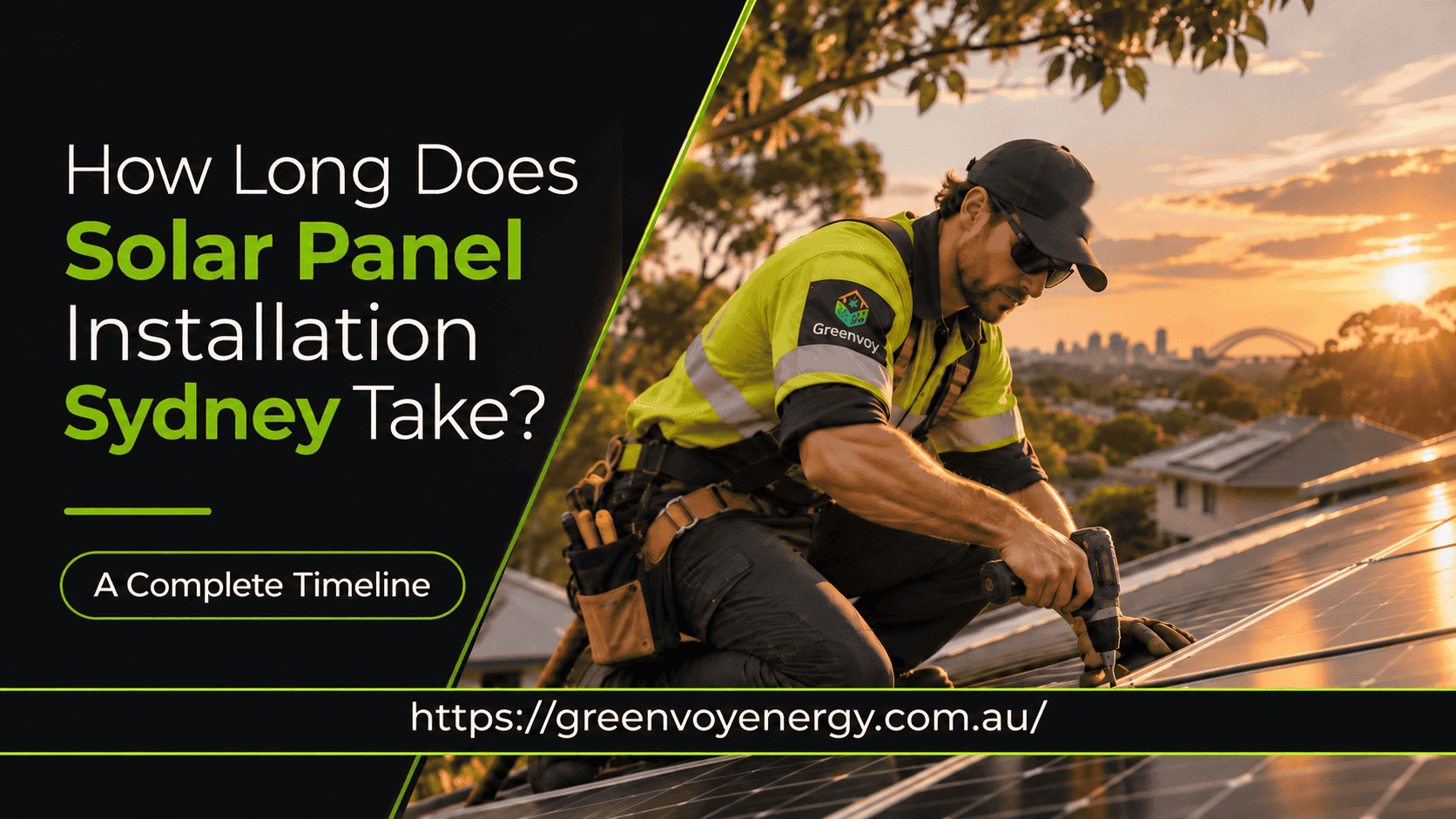
When Daniel, a homeowner in Sydney’s south-west, first considered installing solar panels, he assumed it would be a straightforward weekend job. The installers would arrive, fit the panels, connect an inverter, and by Monday morning, his family would be enjoying cheaper electricity. At least, that’s how he’d pictured it.
After requesting a few quotes, he realised there was more involved. Someone needed to assess the roof, recommend the right system, arrange network approval and organise the installation. He also discovered that having solar panels fitted didn’t necessarily mean they could start generating usable electricity straight away.
Daniel’s experience is an illustrative example, but the questions are familiar to many Sydney households. Solar Panel Installation Sydney typically takes around one to three days for the physical installation, while the complete process from consultation to final activation can stretch over several weeks.
At Greenvoy Energy, homeowners can explore solar solutions based on their property’s requirements and energy consumption. Understanding the installation timeline beforehand makes the entire experience easier to plan, particularly when you’re balancing work, family and everyday commitments.
How Long Does Solar Panel Installation Take in Sydney?
The time required for residential solar installation depends largely on the size of the system, the property’s roof and the existing electrical setup. A standard installation on a suitable single-storey Sydney home may be completed within one working day. Properties with complicated roof layouts, difficult access or additional electrical requirements can take two to three days, sometimes longer.
However, the actual installation is only one part of the journey. Before work begins, the system needs to be designed, the connection requirements addressed and an installation date confirmed. Once the panels are fitted, electrical commissioning and any necessary meter arrangements must also be completed.
For most homeowners researching solar installation time in Sydney, allowing several weeks for the full process is more realistic than expecting everything to happen in a few days. The following stages explain where that time goes and what you can do to avoid unnecessary delays.
Stage 1: Initial Consultation and Home Solar Assessment
Daniel’s first discussion about solar wasn’t really about panels. It was about his family’s electricity bills and when they used the most power. With two children at home and air conditioning running regularly through summer, understanding their daily consumption was an important starting point.
A proper solar assessment considers electricity usage, suitable roof space, panel orientation, shading and potential future requirements. Some homeowners may also be planning to purchase an electric vehicle or add battery storage later, which can influence the system design.
Homeowners exploring Greenvoy Energy’s solar panel solutions can begin by sharing recent electricity bills and basic property information. Roof imagery and photographs may help with an initial assessment, although an on-site inspection can still be needed.
This early stage may take a few days or longer, depending on appointment availability and the property’s complexity. It’s worth providing accurate information from the beginning, as small misunderstandings about roof conditions or electricity usage can lead to changes later.
Stage 2: Choosing the Right Solar System for Your Sydney Home
Once Daniel understood his household’s electricity usage, he began comparing system sizes. Initially, he thought a larger installation would automatically deliver better savings. But he soon learned that generating more electricity isn’t always the same as using it efficiently.
Residential solar systems in Sydney commonly include capacities around 6.6kW and 10kW, alongside larger configurations where suitable. The appropriate size depends on available roof space, household consumption, network export conditions and budget.
Panel and inverter selection also matters. Different products offer different efficiency characteristics, warranties and installation requirements. Greenvoy Energy provides access to solar panel solutions, including options from manufacturers such as AIKO and Jinko, helping homeowners consider equipment suited to their needs.
It’s also sensible to review solar inverter options from Greenvoy Energy before making a final decision. An inverter is an essential part of the system, and its suitability can influence performance and future upgrade possibilities.
The design and quotation stage may take several days, particularly when different configurations need comparing. Rushing this decision rarely helps. A well-matched system should remain useful long after installation day.
Stage 3: Solar Grid Connection Approval in Sydney
One part of the process Daniel hadn’t expected was obtaining permission to connect the system to the electricity network. He’d assumed that because he owned the house, installing rooftop solar was entirely his decision.
In reality, grid-connected systems need to meet the requirements of the relevant electricity distribution network. Depending on the property’s location, Sydney homeowners may deal with Ausgrid or Endeavour Energy.
The proposed system capacity, inverter specifications and electricity export arrangements can affect the approval process. Straightforward residential applications may receive approval quickly, while more complicated connections can require further assessment.
This is an important stage of the solar panel installation process in NSW, particularly for households considering larger systems. Ask Greenvoy Energy which network requirements apply to your property and whether the proposed design needs any adjustments before installation.
Approval timelines vary, so homeowners should avoid treating an estimated installation date as guaranteed until the necessary arrangements are confirmed.
Stage 4: Roof Inspection and Installation Preparation
With the system design progressing, Daniel turned his attention to the roof. His home was in reasonable condition, but he hadn’t considered whether the existing tiles, electrical switchboard and access points were suitable for solar equipment.
Before installation, the roof must be assessed for the proposed mounting arrangement. The installer also needs to consider safe access, panel positioning, cable routes and the location of the inverter.
Older Sydney homes sometimes need additional electrical work or roof repairs before solar can be installed safely. A switchboard upgrade, for example, may add time and cost that wasn’t obvious during the initial discussion.
For residential solar panel installation Sydney, preparation is just as important as choosing the panels themselves. Ask for any additional work to be identified in the quotation, including who will complete it and whether it affects the installation schedule.
A house that’s ready for installation can move through this stage relatively quickly. If repairs or upgrades are required, the overall timeline may extend.
Stage 5: What Happens on Solar Panel Installation Day?
After the paperwork and planning, Daniel finally reached the part he’d been looking forward to. The solar equipment was ready, the installation date was confirmed, and the family had made arrangements to provide access to the house.
On installation day, the team generally begins by preparing the roof and securing the mounting system. Solar panels are then positioned and attached, followed by the required cabling, inverter installation and electrical connections.
Qualified electrical workers carry out the relevant electrical tasks, and the installation must meet applicable Australian standards and safety requirements. Depending on the work involved, the household may experience a temporary electricity interruption.
Most straightforward residential installations take around one to three days, although weather and property conditions can influence progress. Heavy rain, unsafe winds or unexpected roof issues may prevent installers from completing rooftop work as scheduled.
Daniel’s main concern was whether everything would be finished that afternoon. But a properly completed installation matters far more than meeting an unnecessarily tight deadline. Electrical safety and quality workmanship should never be compromised simply to save a few hours.
Stage 6: Solar System Testing and Commissioning
By the end of the installation, Daniel could see the panels sitting neatly across his roof. He was already imagining how much electricity they’d generate during the next sunny afternoon. There was just one thing he hadn’t fully understood: the system still needed to pass the relevant checks before normal operation.
Testing and commissioning help confirm that the inverter, solar panels and associated electrical equipment have been installed correctly. The installer must also complete the required documentation and follow applicable network procedures.
NSW commissioning requirements are evolving, including the rollout of processes through the Consumer Energy Resources Installer Portal. The exact requirements depend on the network area, system and applicable implementation dates.
Homeowners should ask Greenvoy Energy what commissioning and documentation requirements apply to their installation. Keep copies of the relevant electrical records, equipment warranties and system information, as they may be useful for future maintenance or upgrades.
Stage 7: Smart Meter Setup and Final Solar Activation
Having panels installed and having an operational solar system aren’t necessarily the same thing. Daniel discovered this when he asked whether he could immediately start exporting excess electricity.
A suitable electricity meter is needed for a grid-connected solar system, and an existing meter may require replacement or reconfiguration. In NSW, electricity retailers generally arrange the necessary metering work through their metering providers.
The timing depends on the retailer, the existing meter and the circumstances of the property. Some households may experience little additional delay, while others need to allow more time before the final arrangements are complete.
Once the necessary approvals, metering and commissioning conditions have been satisfied, the system can operate as authorised. Where monitoring is included, homeowners can then begin reviewing solar generation and understanding how much electricity they’re producing.
What Can Delay Solar Panel Installation in Sydney?
Not every home follows exactly the same schedule, and that’s something worth understanding before booking an installation. A modern property with a simple roof layout may be relatively straightforward, while an older home with complicated access or electrical upgrades can require considerably more planning.
Weather is another factor, particularly when rooftop work is involved. Heavy rainfall or strong winds can make installation unsafe, meaning the job may need to be rescheduled rather than rushed.
Network connection approvals, equipment availability and smart meter arrangements can also influence the overall timeline. Some of these stages involve external organisations, so even a well-prepared installer cannot control every date.
When comparing solar panel installers in Sydney, look beyond promises of fast installation. Ask how scheduling works, what could change the proposed date and which responsibilities the installer will manage.
Should You Add a Solar Battery During Installation?
While researching his system, Daniel started thinking about battery storage. His household used considerable electricity in the evenings, and he wondered whether storing excess daytime solar generation might be useful.
Installing a solar battery alongside rooftop panels can be an option, but it introduces further design and electrical considerations. Battery capacity, installation location, inverter compatibility and backup requirements all need attention.
Homeowners can explore Greenvoy Energy’s solar battery solutions when considering whether storage is appropriate for their energy usage.
A battery isn’t essential for every home. Some households may prefer to install solar first, monitor their generation and consumption, and consider storage later. Others may find it useful to design both systems together from the beginning.
The important thing is understanding the requirements before making a decision, rather than choosing additional equipment simply because it’s available.
How to Make Your Solar Installation Process Smoother
Looking back, Daniel realised that most of the preparation had been straightforward once he knew what information was needed. Electricity bills, property photographs and details about the existing switchboard helped move the early conversations along.
Before installation day, homeowners should confirm access arrangements, equipment locations and whether any temporary power interruption is expected. It’s also useful to discuss upcoming roof renovations or electrical changes that could affect the proposed installation.
Working with a solar provider that explains the process clearly can make planning easier. Greenvoy Energy offers solar and related energy solutions for Sydney homeowners, with options to discuss system design, equipment and installation requirements.
Rather than focusing only on how soon the panels can be installed, consider how well the system will suit your household over the years ahead.
Final Thoughts: Start Your Solar Journey with Greenvoy Energy
For Daniel, the biggest surprise wasn’t the work happening on his roof. It was learning how much planning, technical assessment and coordination took place beforehand. Once he understood those stages, the installation timeline made considerably more sense.
For anyone considering Solar Panel Installation Sydney, physical installation commonly takes one to three days, while the complete journey from initial consultation to an operational system may take several weeks. Roof conditions, network approval, system design and metering requirements all influence the final schedule.
At Greenvoy Energy, homeowners can explore solar panel, inverter and battery solutions suited to their property’s requirements. Whether you’re replacing an older system or installing solar for the first time, understanding the process is a useful starting point.
Request a quote from Greenvoy Energy to discuss your Sydney property, electricity usage and proposed solar installation timeline.
Frequently Asked Questions
Q1. How long does solar panel installation take in Sydney?
Most standard residential solar installations take approximately one to three days for the physical work. The exact duration depends on system size, roof accessibility, weather conditions and electrical requirements.
Q2. How long does the entire solar installation process take?
The complete process often takes several weeks, including consultation, system design, network connection approval, installation and final activation. More complicated properties or approval requirements can extend the timeline.
Q3. Can solar panels be installed in one day?
Yes, some straightforward residential solar systems can be installed within one working day. However, larger systems, difficult roof layouts or additional electrical work may require more time.
Q4. Can I use my solar panels immediately after installation?
Not always. Grid-connected solar systems must meet the applicable commissioning, network approval and metering requirements before they can operate as authorised. Your installer should explain when the system can be switched on.
Q5. Does Greenvoy Energy offer solar panel installation in Sydney?
Greenvoy Energy offers solar panels and related energy solutions for Sydney homeowners. You can contact the team to discuss suitable equipment, your property’s requirements and the installation process.


Leave a comment