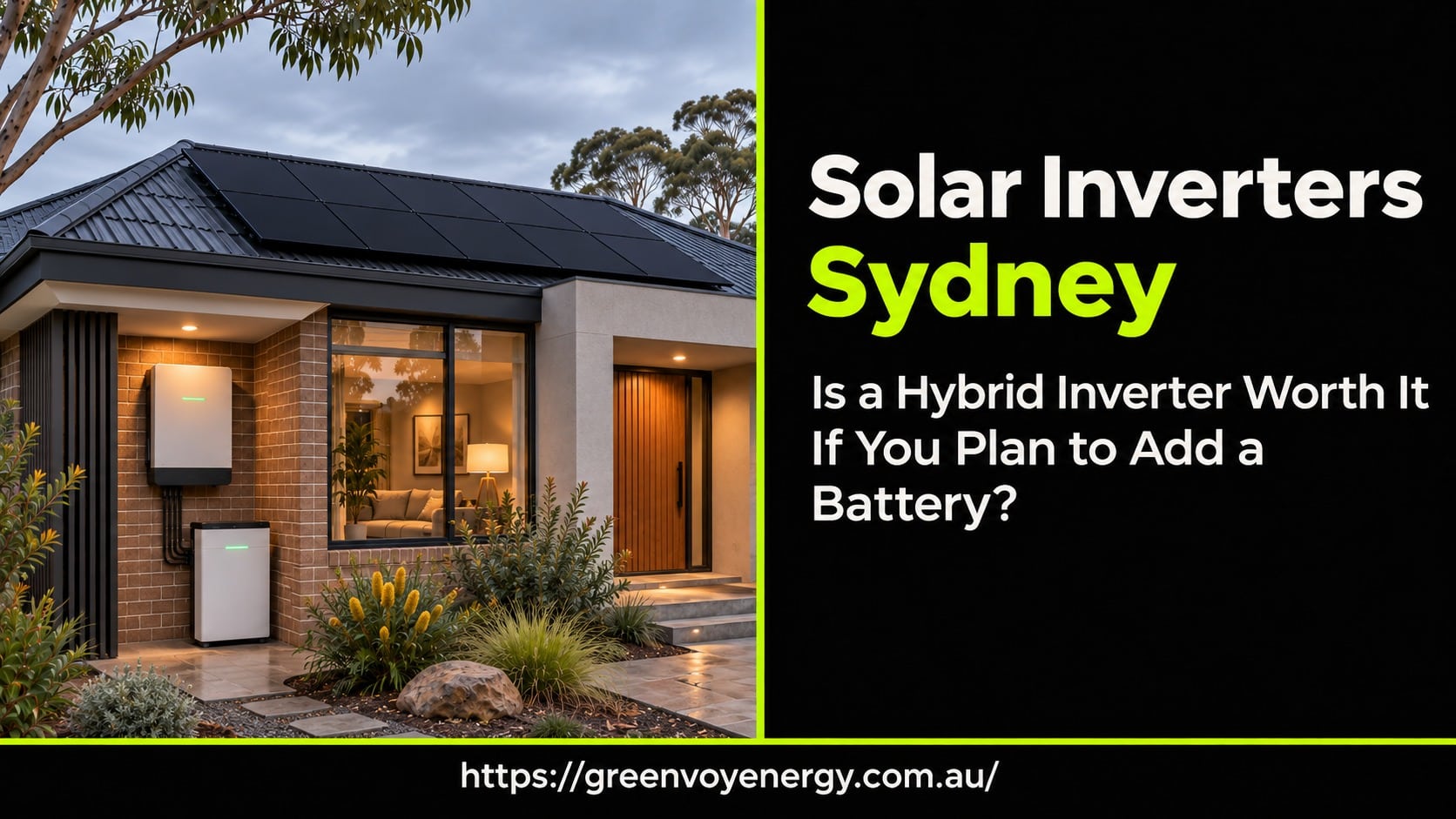
When Olivia and her partner began researching Solar Inverters Sydney for their Marrickville home, they had a straightforward plan: install solar panels now and add battery storage later. Then the quotes arrived. One proposed a standard inverter; another recommended a more expensive hybrid model described as “battery-ready”.
Olivia wondered whether spending more now would spare them another upgrade later. They weren’t buying a battery this year, and she didn’t want to pay for a feature they’d never use. It’s a familiar dilemma for Sydney households planning their energy needs in stages.
Greenvoy Energy offers solar inverter and battery solutions for homeowners weighing up these choices. The useful question isn’t simply whether hybrid technology is better. It’s whether a particular inverter makes sense for your roof, your electricity use and the battery you might actually install.
What Is a Hybrid Solar Inverter?
A standard grid-connected solar inverter converts direct current (DC) electricity from rooftop panels into alternating current (AC) that a home can use. A hybrid inverter performs that job while also supporting the management of a compatible battery, generally through a DC-coupled arrangement.
That means you may be able to install solar first and connect approved storage later. But “battery-ready” doesn’t mean every battery on the market will work. Compatibility depends on the exact inverter model, battery specifications, software and manufacturer requirements.
Before choosing, explore Greenvoy Energy’s solar inverter options and request a list of compatible battery models. That’s more useful than relying on a broad product description.
Hybrid vs Standard Solar Inverter: What’s the Difference?
Olivia’s first quote would run the solar panels without storage. If she bought a battery later, an AC-coupled system might let her keep the existing solar inverter and add a separate battery inverter, sometimes built into the battery equipment.
The hybrid proposal offered another route. With suitable equipment, a DC-coupled battery can operate through the hybrid inverter. That may reduce the need for a separate battery inverter, although installation components, monitoring and electrical work still have to be considered.
Neither option is automatically cheaper or more efficient in every home. Greenvoy Energy can help homeowners compare the complete system configurations, rather than judging one inverter against another in isolation.
Is Paying Extra for a Hybrid Inverter Worth It?
For homeowners comparing Solar Inverters Sydney, the decision often comes down to how soon a battery is likely to be installed. Paying extra for hybrid capability may be worthwhile if you’ve chosen a compatible storage system and expect to add it within the next few years. If the plan is vague, that extra expense deserves a closer look.
Olivia and her partner thought their evening electricity use might increase, particularly if they bought an electric vehicle. But they couldn’t yet say how large a battery they’d need or which brand they’d prefer. Buying around a guess didn’t feel sensible.
Ask Greenvoy Energy to compare an itemised standard-inverter proposal with a hybrid alternative. Look at the upfront difference, possible future work, battery compatibility and warranties. A clear comparison should show what you’re paying for today and what remains uncertain.
Can You Add a Battery to Existing Solar Later?
Often, yes. A suitable AC-coupled battery may be installed alongside an existing solar inverter without replacing panels or a working inverter. This can be useful for households that want to see their real solar generation and consumption before committing to storage.
However, the property and the proposed equipment still need assessment. Switchboard capacity, inverter condition, approved connections and battery placement can all affect the installation. A system advertised as compatible may need additional hardware to meet your requirements.
Greenvoy Energy’s guide to adding a battery to existing solar explains the retrofit questions worth asking before making a purchase.
Check Solar Generation Before Planning Battery Storage
A battery isn’t much use if there is rarely surplus electricity available to charge it. Household demand during the day, roof orientation, shading and seasonal generation all influence how much energy remains after appliances have been supplied.
Olivia checked her bills, but those didn’t tell the whole story. She needed to know when electricity was consumed, not just the total recorded over a quarter. Smart-meter interval data and solar monitoring could offer a clearer picture.
Before selecting a hybrid model, review the proposed panel capacity and likely daytime surplus with Greenvoy Energy. Its solar panel solutions can be considered alongside inverter and future battery requirements, rather than as separate purchases.
Does a Hybrid Inverter Provide Backup During Blackouts?
Not automatically. A hybrid inverter alone doesn’t mean lights and appliances will keep working during an outage. Most ordinary grid-connected solar systems shut down when the network fails for safety reasons.
Backup requires an appropriate battery configuration and any necessary switching equipment. The design also determines which circuits can operate, how much power is available at once and whether solar can recharge the battery while the grid is down.
Olivia wanted refrigeration, lighting and internet access during an outage. She wasn’t expecting to run every appliance. Greenvoy Energy can discuss these priorities when comparing backup-capable equipment, but homeowners should request the proposed backup scope in writing.
Which Battery Brands Are Compatible With Hybrid Inverters?
The answer depends on exact product models. A hybrid inverter may support only a defined range of batteries, and compatibility can change between generations of equipment. Future expansion can also depend on manufacturer conditions.
Greenvoy Energy features inverter and storage products from brands including Sungrow and Sigenergy, alongside battery options such as Tesla Powerwall 3. These are options to investigate, not interchangeable components. A Powerwall-based proposal, for example, may use a different coupling arrangement from a battery connected directly to a hybrid inverter.
Review Greenvoy Energy’s solar battery solutions and ask for the precise model numbers, required controllers or gateways, usable battery capacity and expansion limitations.
What About Sydney Grid Approval and Installation?
Solar and battery equipment must comply with applicable electrical standards and electricity-network connection conditions. Depending on the address, Sydney properties may fall within Ausgrid or Endeavour Energy’s network area. Changing equipment later can mean reassessing the approved configuration.
For Solar Inverters Sydney installations, ask who manages connection applications, electrical checks and any meter or switchboard work. NSW requirements for connected energy equipment are evolving, so a battery upgrade in a few years may not follow exactly the same process as today’s solar installation.
Only appropriately licensed and authorised professionals should perform the relevant electrical and connection work. Greenvoy Energy can be approached about the design and installation requirements that apply to a particular property.
What Should a Hybrid Inverter Quote Include?
When Olivia revisited her quotes, she stopped asking which inverter was “best” and started asking what each quote actually covered. It made the price difference easier to understand.
Check the inverter model, AC rating, supported panel configuration, monitoring features, warranty terms and named compatible batteries. Ask whether backup hardware, future electrical modifications and battery installation labour are included or excluded. If the proposed system is expandable, get the conditions in writing.
A quote should also explain how the design suits your household’s current consumption. Greenvoy Energy can help homeowners discuss solar-only and battery-ready approaches without assuming that everyone needs the same solution.
Final Thoughts: Plan Ahead With Greenvoy Energy
Olivia didn’t need to buy a battery immediately. She needed a solar system that worked well now and an honest picture of what storage might require later. Once she understood both routes, the hybrid premium became a decision she could evaluate rather than a feature she felt pressured to buy.
For homeowners researching Solar Inverters Sydney, a hybrid inverter can be a sensible choice when future battery plans are specific and compatible equipment has been identified. A standard inverter and later AC-coupled battery may be equally practical when those plans are still uncertain.
Request a quote from Greenvoy Energy with your electricity bills, roof details and future battery priorities. Ask for a comparison that clearly separates today’s installation from potential future upgrades.
Frequently Asked Questions
Q1. Do I need a hybrid inverter to add a solar battery?
No. A compatible AC-coupled battery can sometimes work alongside an existing standard solar inverter. A DC-coupled battery generally needs a suitable hybrid inverter or equivalent supported arrangement.
Q2. Can I install a hybrid inverter without buying a battery yet?
Yes, many hybrid inverters can operate initially with rooftop solar alone. Confirm which batteries the exact model supports and whether future installation conditions apply.
Q3. Is a hybrid inverter always more efficient?
No. Efficiency depends on the complete design, energy flow, conversion losses and how storage is used. Compare realistic system performance instead of relying on the hybrid label.
Q4. Will a hybrid inverter keep my home running in a blackout?
Only if the complete configuration supports backup operation. A compatible battery, switching equipment and appropriate circuit design may be needed.
Q5. Can Greenvoy Energy help me plan a future battery upgrade?
Greenvoy Energy offers solar inverter and battery solutions for Sydney homeowners. Share your existing equipment details and plans to discuss suitable configurations and installation requirements.



Leave a comment