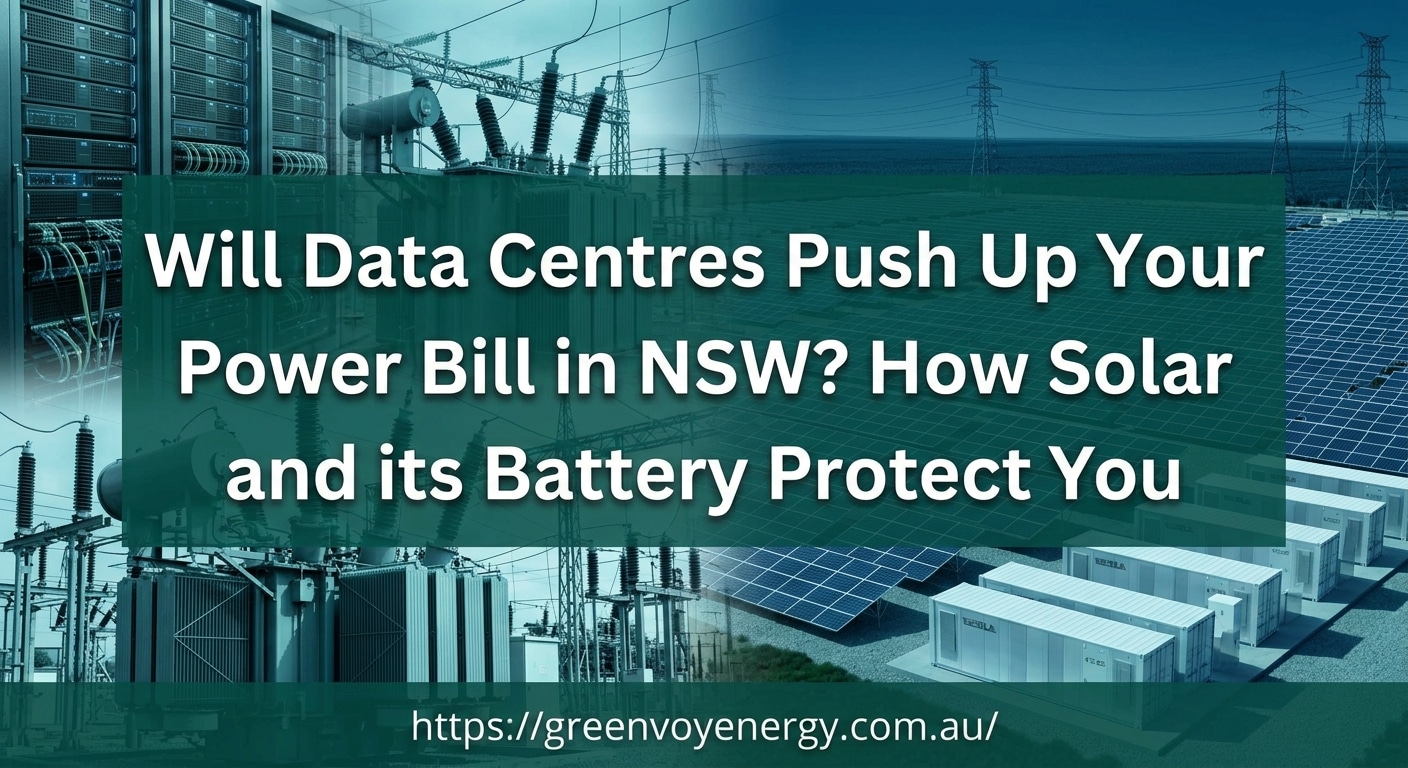
Australia is entering a period of rapid growth in data centre development. Cloud computing, artificial intelligence, streaming, online services, and digital businesses all depend on large facilities running around the clock. NSW is becoming a major location for this investment, but there is an obvious question for households and small businesses: could the growing demand for electricity from data centres eventually push up power bills?
The short answer is that data centres will place more pressure on the NSW electricity network as they expand. The NSW Government is already considering how the cost of new network infrastructure should be handled, so that existing electricity customers are not left paying for the additional capacity required by these projects. As of July 2026, data centres seeking network connections in NSW represented up to 28 GW of potential capacity, with around 13 GW in advanced discussions.
That does not mean your electricity bill is about to rise simply because a new data centre opens nearby. Electricity prices are affected by many factors, including wholesale energy costs, network charges, generation costs, government schemes, and household consumption.
For NSW households and businesses, however, there is a practical way to become less exposed to rising electricity costs: generate more of your own electricity with solar and store unused energy in a battery.
Why Are Data Centres Using So Much Electricity in NSW?
A data centre is not simply a building full of computers. It is a highly engineered facility designed to keep servers, networking equipment, and other digital infrastructure operating continuously.
The computers themselves consume electricity, but they are only part of the picture. Data centres also need cooling systems, power management equipment, security systems, lighting, and backup infrastructure. The demand becomes significant because these facilities can operate 24 hours a day, seven days a week.
NSW is actively encouraging investment in data centres because they support digital infrastructure, jobs and economic activity. At the same time, the NSW Government recognises that rapid growth in electricity demand means additional network investment will be required.
The issue is therefore not that one data centre will suddenly make a household’s electricity bill more expensive. The bigger concern is what happens when a large number of energy-intensive facilities seek connections at the same time. More demand can mean more investment in generation, transmission, and distribution infrastructure. Someone ultimately has to pay for that infrastructure.
That is why NSW is now considering reforms designed to ensure data centres contribute appropriately to the electricity network costs associated with their additional demand, rather than shifting those costs onto households and small businesses.
Could Data Centres Actually Increase Your Power Bill?
Potentially, but it is important to understand how electricity pricing works before assuming that data centres will directly add a specific amount to your bill. Your electricity bill is made up of several components. Wholesale electricity prices are one part. Network charges are another. Retailer costs, government charges, and your own electricity consumption also matter.
When a large new electricity customer connects to the grid, the network may need additional infrastructure to supply that demand. If the cost of that infrastructure is spread broadly across electricity customers, there is a risk that households and smaller businesses could indirectly carry part of the cost. That is exactly the issue the NSW Government is addressing through its proposed data centre electricity network reforms.
The government’s stated objective is to make sure data centres can connect efficiently without increasing electricity prices and risks for households and small businesses. The NSW Data Centre Guidelines also include a principle that data centres should impose no net costs on other electricity customers and should fund additional energy supply.
So, while it would be misleading to say that data centres automatically mean higher power bills, their growing electricity demand is an important issue for the future of the NSW energy system.
What Does Solar Have to Do With Data Centre Electricity Demand?
Solar gives households and businesses a way to produce electricity on site rather than purchasing all of their energy from the grid. For a typical NSW property, rooftop solar generates electricity during daylight hours. That electricity can be used immediately by appliances, heating and cooling systems, office equipment, or other loads.
Any surplus electricity can be sent to the grid or, when a suitable battery is installed, stored for later use. This changes the relationship between your property and the electricity network. Instead of relying entirely on grid electricity, you can generate part of your own supply. That can become particularly valuable as electricity demand across NSW grows.
NSW already has a major renewable energy expansion underway. The NSW Government reports that 87 renewable energy projects have been approved since November 2019, representing 14.88 GW of new generation and 20.13 GW of energy storage projects.
For individual households and businesses, rooftop solar is the small-scale version of the same broader shift towards locally generated renewable electricity.
How Does a Solar Battery Protect You From Rising Electricity Costs?
Solar panels are excellent at producing electricity when the sun is shining, but there is an obvious limitation. Your home or business does not stop using electricity when the sun goes down. This is where a battery becomes useful.
During the day, solar panels can generate more electricity than the property needs. Instead of sending all of that excess energy back to the grid, a battery can store some of it. Later, when solar production falls, the stored electricity can be used.
The NSW Government explains that batteries allow excess solar energy generated during daylight hours to be stored and used later, reducing the need to draw electricity from the network. For a household, this can mean using more of your own solar power in the evening.
For a business, it can mean keeping more solar energy available for later operations, depending on its load profile and battery system. The battery does not eliminate your electricity bill. Instead, it can reduce how much electricity you need to buy from the grid.
Solar Panels and Batteries Work Better Together
- Solar and batteries perform different jobs.
- Solar panels generate electricity.
- The battery stores electricity.
- When combined, they can provide a more flexible energy system.
Imagine a household using electricity throughout the evening. Solar production may be high between late morning and afternoon, but the household’s electricity use may increase later when people return home, cook dinner, run appliances, and use heating or cooling.
Without a battery, much of the unused daytime solar generation may be exported. With a suitably sized battery, some of that energy can be stored and used later. The same principle can apply to businesses.
A commercial property may have strong solar production during the middle of the day while its electricity demand continues into the afternoon and evening. A battery can provide another way to shift some of that energy to when it is needed.
The right system depends on the property’s electricity consumption, solar generation, available roof space, battery capacity, and electricity tariff. There is no single battery size that is right for every NSW property.
Can a Battery Help During Peak Electricity Demand?
Yes, and this is becoming increasingly important in NSW. The state operates a Peak Demand Reduction Scheme designed to reduce electricity demand during periods when demand on the network is high.
The scheme includes eligible battery activities for houses, businesses, and apartment buildings, along with virtual power plant participation. Updated NSW rules came into effect on 7 September 2026.
This matters because batteries can do more than simply store solar power for one property. When connected to an eligible virtual power plant, groups of batteries can potentially work together to provide stored electricity to the grid during periods of high demand.
The NSW Government describes virtual power plants as connected groups of batteries that can allow stored electricity to be sold to the grid during peak demand periods.
For battery owners, this can create another potential benefit. Their battery may be useful not only for reducing grid purchases at home or at work, but also as part of a broader energy network.
Why Solar and Battery Storage Matter More as NSW Electricity Demand Grows
The electricity system is changing.
NSW needs more electricity to support data centres, electric vehicles, new industries, homes, businesses and the wider shift towards electrification.
At the same time, the state is replacing older generation with more renewable energy and investing in storage. That makes energy storage increasingly important.
Solar production changes throughout the day. Electricity demand also changes throughout the day. A battery helps bridge the gap between when electricity is generated and when it is needed.
This is particularly useful because NSW needs reliable energy storage alongside renewable generation. The NSW Government notes that batteries and other storage technologies are important for maintaining a reliable electricity supply when renewable generation is lower.
- For an individual property, the benefit is much simpler.
- You produce electricity with solar.
- You store some of the excess.
- You use more of your own energy later.
- You purchase less electricity from the grid.
- That can help reduce your exposure to future electricity price changes.
What Are the Benefits of Installing Solar and a Battery in NSW?
For many households and businesses, the appeal goes beyond simply reducing electricity purchases.
Lower reliance on grid electricity
Generating and storing your own electricity can reduce the amount of power you need to purchase from your retailer.
Better use of rooftop solar
A battery can store surplus solar electricity instead of requiring you to use it immediately or export it.
More control over energy use
A battery gives you another option for deciding when stored electricity is used.
Protection against future price changes
Nobody can predict exactly where electricity prices will go over the next decade. Using more self-generated electricity can reduce your exposure to some changes in grid electricity costs.
Support for a changing electricity network
Distributed batteries can also contribute to a more flexible electricity system, particularly when they participate in demand response or virtual power plant programs.
NSW is actively supporting greater battery uptake. The state’s current Peak Demand Reduction Scheme includes battery incentives for businesses and apartment buildings, while eligible battery owners can also participate in virtual power plant incentives.
Is Solar Alone Enough to Protect Your Power Bill?
Not necessarily. Solar can significantly reduce grid electricity use, but its output depends on daylight and weather. If most of your electricity consumption happens during the evening, a large portion of your solar generation may occur when you are not using as much power.
A battery can improve the situation by shifting some daytime solar generation into the evening. However, installing the largest possible solar system and battery is not automatically the best financial decision. The system should be designed around actual electricity consumption.
For example, a household with high daytime electricity use may benefit strongly from solar generation without needing a very large battery.
Another household with relatively low daytime consumption and high evening use may place greater value on battery storage. The same principle applies to commercial properties.
A good solar and battery design starts with understanding when the property uses electricity, not simply how much electricity it uses each year.
How Much Solar and Battery Storage Does a NSW Property Need?
There is no universal answer.
The right system depends on factors such as:
- Annual electricity consumption
- Daily electricity usage patterns
- Daytime versus evening consumption
- Available roof space
- Existing solar system
- Property location
- Electricity tariff
- Battery capacity
- Backup power requirements
- Future changes in electricity use
A household with a large pool, air conditioning, and an electric vehicle may have a very different energy profile from a small apartment. Likewise, a warehouse, office, or retail property can have a completely different demand pattern.
This is why a proper assessment is more useful than choosing a system based purely on a neighbour’s installation.
Can Solar and Batteries Keep Your Home Running During a Blackout?
A battery can provide backup power, but this depends on the system design. Not every solar and battery installation will continue supplying electricity during a grid outage.
A backup-capable system needs the appropriate equipment and configuration to safely isolate the property from the grid and supply selected loads.If blackout protection is important to you, discuss it with your installer before choosing a system. You may also need to decide which appliances or circuits you want backed up.
For some households, that could include:
- Refrigeration
- Lighting
- Internet equipment
- Essential medical equipment
- Security systems
- Selected power outlets
A larger system may be capable of supporting more circuits, but the cost and technical requirements will also increase.
What Should You Look For When Choosing a Solar and Battery System?
Buying solar and a battery is a long-term decision, so the cheapest quote is not necessarily the best option.
Start With Your Electricity Usage
Look at your recent electricity bills and understand how much power you use. More importantly, look at when you use it.
Consider Future Electricity Needs
Think about whether you plan to add an electric vehicle, air conditioning, a pool, a home office, or other major electrical loads.
Choose the Battery Around Your Solar System
The battery should work effectively with the solar system rather than being treated as a separate purchase.
Check Warranty and Product Support
Battery systems are long-term investments. Understand the product warranty, installer warranty, and available support before signing a contract.
Use an Accredited Installer
Electrical and solar battery installations need to meet relevant Australian and NSW requirements. NSW has Service and Installation Rules that electricians and Accredited Service Providers must follow when connecting customers to the electricity distribution network.
What Are the NSW Rules Around Batteries and Solar in 2026?
The NSW energy market is continuing to change.
In September 2026, new NSW Energy Security Safeguard rules came into effect, including changes affecting the Peak Demand Reduction Scheme. The updated scheme includes battery-related activities for households, businesses, and apartment buildings.
There are also current NSW incentives and programs connected with batteries and virtual power plants, subject to eligibility requirements. Because government programs and eligibility rules can change, homeowners and businesses should check the current requirements before making a purchasing decision.
The bigger picture is clear, though. Battery storage is becoming an increasingly important part of NSW’s electricity strategy as the state manages growing demand and adds more renewable generation.
What Does This Mean for NSW Households and Businesses?
Data centres are not going away.
Digital services, artificial intelligence, cloud computing, and online infrastructure are likely to keep increasing electricity demand.
The challenge for NSW is making sure the electricity network can support that growth without unfairly transferring the costs to existing customers.
The NSW Government is already consulting on reforms intended to address data centre connection and network cost recovery arrangements. The current consultation is scheduled to run until 14 September 2026.
For households and businesses, the practical response is not to worry about individual data centres. It is to look at how much control you have over your own electricity use.Solar can reduce your reliance on purchased electricity during the day.
A battery can store surplus solar energy for later. Together, they can give you greater control over where your electricity comes from and when you use it.
Final Thoughts
The growth of data centres will increase electricity demand in NSW, but it would be too simplistic to say that every new data centre will automatically increase household power bills. The real issue is the scale of electricity demand and how the cost of new generation and network infrastructure is allocated.
NSW is already considering regulatory changes to make sure data centres contribute appropriately to the costs associated with their electricity connections. At the same time, the state is expanding renewable generation and battery storage as part of its broader energy transition.
For homeowners and businesses, solar and battery storage provide a practical way to take more control of electricity consumption. Solar produces power when the sun is available.
A battery stores excess energy for later. The result can be greater use of self-generated electricity, less reliance on the grid, and better protection against changes in future electricity costs.
If your electricity bills are already significant, or you expect your energy use to increase, it may be worth having your property assessed for a properly sized solar and battery system.
Frequently Asked Questions
Q1. Will data centres make electricity more expensive in NSW?
Data centres are expected to create significant additional electricity demand in NSW. This may require investment in electricity generation and network infrastructure. The NSW Government is proposing reforms intended to ensure data centres contribute to the costs associated with their additional network requirements rather than shifting those costs onto households and small businesses.
Q2. Can solar protect my home from rising electricity prices?
Solar can reduce the amount of electricity you need to purchase from the grid. The amount you save depends on your electricity consumption, solar system size, energy usage patterns, electricity tariff, and other factors.
Q3. Is a battery worth adding to solar in NSW?
A battery can be worthwhile for properties that have significant electricity use outside solar production hours. It can store excess daytime solar energy and make that energy available later. Whether it makes financial sense depends on the property’s electricity usage, system cost, tariffs, and available incentives.
Q4. Can a solar battery reduce my reliance on the electricity grid?
Yes. A battery can store surplus solar energy and make it available when solar panels are producing little or no electricity. This can reduce the amount of electricity purchased from the grid.
Q5. Can batteries help the NSW electricity grid?
Yes. Batteries can help reduce demand from the grid during high-demand periods. Eligible batteries can also participate in virtual power plants, where connected batteries can provide stored electricity to the grid during peak periods.
Q6. Do I need both solar panels and a battery?
Not necessarily. Solar panels can reduce daytime electricity purchases on their own. A battery becomes useful when you want to store excess solar electricity and use it later. The right combination depends on your property’s electricity consumption and usage pattern.
Q7. Will a battery keep my house running during a blackout?
It can, but only if the battery system has been designed and installed with suitable backup functionality. Not every battery installation provides backup power during a grid outage.
Q8. How do I know what size solar and battery system I need?
The right size depends on your electricity consumption, when you use electricity, available roof space, existing solar generation, future energy needs, and your preferred level of backup. A professional assessment of your electricity usage is the best starting point.
Q9. Are there battery incentives available in NSW?
NSW currently has battery-related incentives and programs, including activities under the Peak Demand Reduction Scheme and incentives associated with virtual power plants. Eligibility varies by property, battery system, and program, so current government requirements should be checked before installation.


Leave a comment