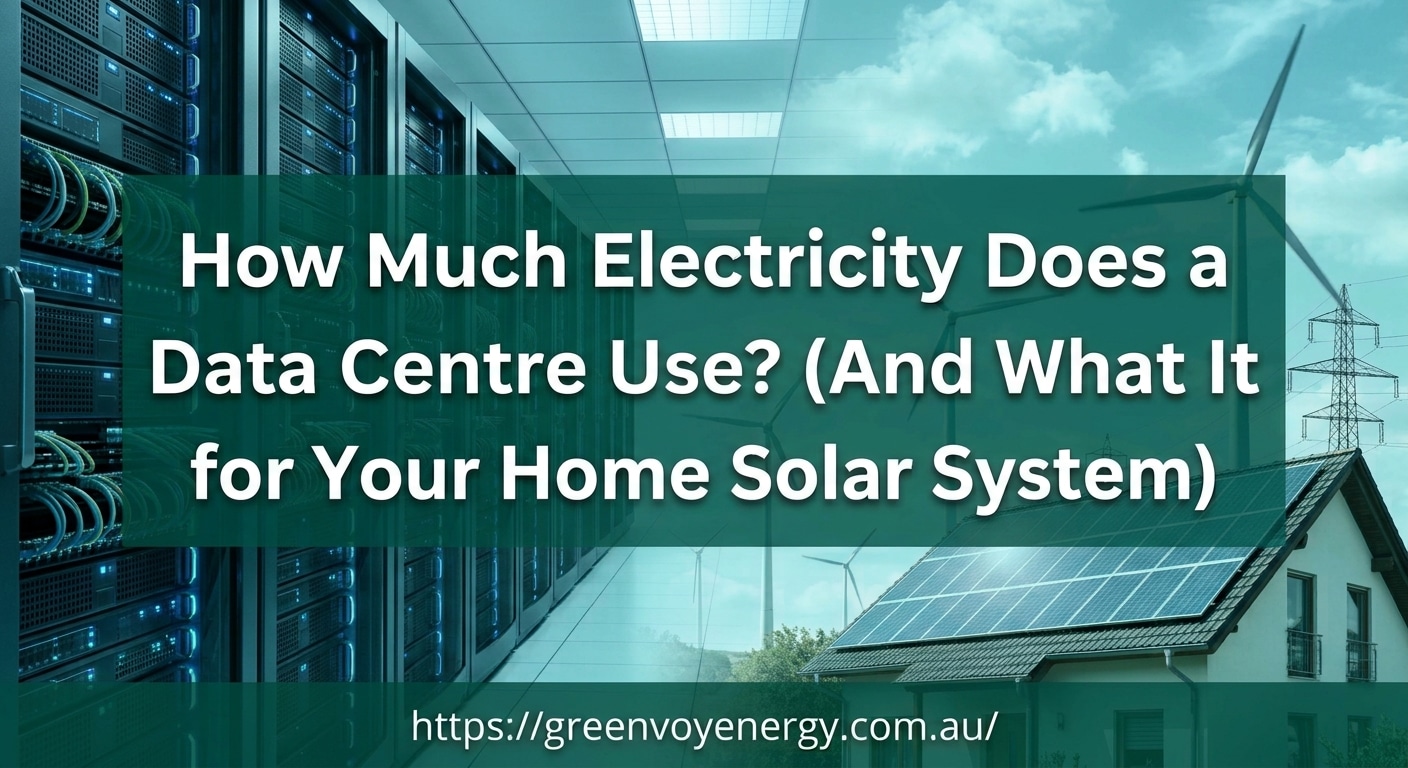
Data centres are becoming a much bigger part of Australia’s electricity conversation. Every time we stream a movie, save files to the cloud, use artificial intelligence, make an online payment, or access a business platform, we rely on servers operating inside data centres. Most people never see these facilities, but they use a significant amount of electricity.
As more data centres are built across Australia, particularly around major cities and technology hubs, many homeowners are starting to ask a simple question: how much electricity does a data centre actually use, and could growing electricity demand affect my own power costs?
The answer depends on the size and type of facility. A small data centre may use electricity on a scale similar to a large commercial building, while a major hyperscale facility can consume as much power as a small town.
For homeowners, the rise of energy-intensive infrastructure does not mean a data centre will suddenly double your electricity bill. Electricity prices are influenced by many factors. However, growing demand does place additional pressure on Australia’s energy system and increases the importance of producing and using electricity efficiently.
This is where home solar and battery storage can make a real difference.
By generating electricity on your own roof and storing some of it for later, you can reduce the amount of power you need to buy from the grid. As Australia’s electricity system continues to change, having greater control over your household energy use may become increasingly valuable.
How Much Electricity Does a Data Centre Actually Use?
There is no single answer because data centres vary enormously in size. A smaller enterprise data centre serving one company or organisation will use far less electricity than a large facility supporting cloud computing services used by millions of people. Electricity use is usually measured in kilowatts, megawatts, and, at a much larger scale, gigawatts.
For perspective:
- A kilowatt is commonly used to measure smaller electrical loads.
- A megawatt equals 1,000 kilowatts.
- A gigawatt equals 1,000 megawatts.
A large modern data centre can require tens of megawatts of electricity, while major hyperscale developments can require significantly more. What makes data centres different from many other buildings is that they need electricity continuously.
A typical office may use less electricity overnight when people go home. A retail store can reduce its energy use after closing. A data centre, however, needs to keep its digital infrastructure operating around the clock.
The servers do not simply switch off at the end of the day. That constant demand is one reason data centres are receiving more attention from electricity networks, governments, and energy companies.
Why Do Data Centres Use So Much Power?
The servers inside a data centre are the most obvious source of electricity consumption, but they are not the only ones. A modern data centre needs a large amount of supporting infrastructure to operate safely and reliably.
Servers and Computing Equipment
Servers process, store, and transfer enormous amounts of digital information. The more computing power is required, the more electricity is needed.
The rapid growth of artificial intelligence has added another layer to this demand. Advanced AI systems require powerful computing hardware, and high-performance computing equipment can consume large amounts of electricity.
Cooling Systems
Computing equipment produces heat. Without effective cooling, servers can overheat and fail. Data centres therefore use cooling systems designed to maintain suitable operating temperatures. Depending on the facility, this may involve air cooling, liquid cooling, chillers, pumps, and other specialised equipment. Cooling can represent a significant part of a data centre’s total energy use.
Power Distribution and Backup Systems
Data centres also need equipment to manage and distribute electricity.
This can include:
- Transformers
- Switchgear
- Uninterruptible power supplies
- Battery systems
- Backup generators
- Electrical monitoring equipment
Reliability is essential because even a short interruption can affect businesses, online services, and customers.
Security and Building Systems
Lighting, security systems, access controls,s and other building services also consume electricity. Individually, these systems may use far less energy than the servers, but they still form part of the overall load.
What Is Power Usage Effectiveness?
One of the common ways the industry measures data centre efficiency is through a metric known as Power Usage Effectiveness, often called PUE. Put simply, PUE compares the total energy used by the facility with the energy used by the computing equipment itself.
A more efficient data centre uses a larger proportion of its electricity to power its IT equipment rather than cooling and other supporting systems.
This is why newer facilities often focus heavily on:
- More efficient cooling
- Better airflow management
- Advanced monitoring, higher-efficiency electrical equipment
- Renewable energy
- Battery storage
- Improved server technology
Even with major efficiency improvements, however, total electricity demand can continue to rise as more computing capacity is added.
This is the key point.
A data centre can become more efficient while still using more electricity overall if its computing capacity grows rapidly.
How Does Data Centre Electricity Demand Affect Australian Households?
The electricity used by a data centre does not directly come from your home’s power supply. Australia operates a much larger electricity system made up of generators, transmission infrastructure, distribution networks, businesses, and households.
However, when large new electricity users connect to the network, the system may need additional capacity.
That can involve investment in:
- New generation
- Battery storage
- Transmission infrastructure
- Distribution infrastructure
- Network upgrades
As electricity demand grows, Australia needs enough reliable generation and network capacity to support it. The way these costs are managed matters.
Governments, energy regulators,s and network operators need to balance the requirements of major industrial customers with the need to protect households and smaller businesses from unnecessary costs.
For homeowners, the bigger picture is simple.
Australia’s electricity system is changing, and demand is expected to grow as more activities become electrified.
That includes:
- Data centres
- Electric vehicles
- New housing
- Commercial development
- Advanced manufacturing
- Electrified heating
- Digital infrastructure
Using less grid electricity where possible can give households more control over their energy costs.
Can Growing Data Centre Demand Push Up Your Electricity Bill?
It is possible for growing electricity demand to influence energy prices over time, but it would be inaccurate to say that data centres alone determine what households pay for electricity.
Your power bill is affected by several factors, including:
- Wholesale electricity prices
- Network charges
- Retailer costs
- Government programs and charges
- Your electricity tariff
- How much electricity does your household use
Large electricity users can increase the need for new energy infrastructure, but they can also support investment in new generation and storage.
The impact on household electricity prices depends on how the broader energy system develops.
For homeowners, trying to predict every future movement in electricity prices is difficult.
A more practical question is:
How can I reduce the amount of electricity I need to buy from the grid?
For many Australian households, solar is the starting point.
What Does a Data Centre Have to Do With Your Home Solar System?
At first glance, a large data centre and a suburban rooftop solar system may seem completely unrelated. In reality, both are part of the same changing electricity landscape. Data centres are increasing the demand for electricity.
Australia is also increasing renewable energy generation and energy storage. Homeowners with solar panels can generate some of their own electricity rather than purchasing all of it from the grid. During daylight hours, your solar system produces electricity that can be used by your home.
Depending on your energy use at the time, solar power can help run:
- Air conditioning
- Appliances
- Lighting
- Home office equipment
- Pool pumps
- Electric vehicle chargers
- Other household loads
The more solar electricity you use yourself, the less electricity you may need to purchase from the grid during those periods. That is where your home solar system becomes part of a much broader energy transition.
How Home Solar Reduces Your Reliance on the Grid
A grid-connected home without solar purchases nearly all of its electricity from an electricity retailer. A home with rooftop solar can produce some of its own electricity. For example, imagine your solar panels are generating electricity during the middle of the day.
Your home can use that energy immediately.
If your appliances, air conditioning, or other electrical equipment are operating, your solar system may reduce the amount of electricity you need to draw from the grid. This can lower your reliance on purchased electricity during solar production hours. However, solar panels only generate electricity when there is enough sunlight.
Your home may still need electricity from the grid:
- At night
- Early in the morning
- During periods of low solar production
- When household demand exceeds solar generation
This is where battery storage becomes important.
How a Solar Battery Changes the Way You Use Electricity
Without a battery, excess solar electricity that your home does not use immediately may be exported to the grid. With a battery, some of that surplus electricity can be stored for later use. This means energy generated during the day may be available during the evening.
A typical household may produce plenty of solar electricity during the middle of the day but consume more power later.
For example, electricity demand may increase when:
- Family members return home
- Air conditioning is running
- Dinner is being prepared
- Appliances are switched on
- Lighting is required
- Entertainment systems are used
A battery can help bridge the gap between when solar electricity is generated and when your household needs it. The benefit is not that you become completely independent from the grid overnight. The benefit is that you can use more of the electricity generated by your own solar system.
Solar Panels and Batteries Work Together
Solar panels and batteries perform different jobs.
Solar panels generate electricity
Your rooftop solar system produces electricity when sunlight is available.
Batteries store electricity
A battery can store surplus solar generation for later use. Together, they can create a more flexible household energy system. Instead of relying entirely on grid electricity after sunset, a home with a suitable battery may be able to use stored solar energy during the evening.
The value of this depends on the household.
A property with high daytime electricity use may receive strong benefits from solar even without a large battery. A household with significant evening electricity use may see greater value in battery storage. There is no single setup that suits every property.
How Much Solar Does the Average Home Need?
The right solar system size depends on how much electricity your household uses and when you use it. A larger home does not always need a larger solar system.
For example, a large home occupied mainly in the evenings may have a different energy profile from a smaller home where people work from home during the day.
Important factors include:
- Annual electricity consumption
- Daytime electricity use
- Evening electricity use
- Number of people in the household
- Air conditioning
- Pool equipment
- Electric vehicles
- Electric hot water systems
- Available roof space
- Roof orientation
- Future energy requirements
The best starting point is understanding your electricity usage rather than simply choosing the largest solar system that fits on the roof.
What Size Battery Should You Consider?
Battery sizing also depends on your household’s energy profile. A battery that is too small may not store enough energy to make a meaningful difference during the evening. A battery that is much larger than your actual needs may not always provide the best value.
Before choosing a battery, it is useful to consider:
- How much solar electricity do you export
- How much electricity do you use after sunset
- Your electricity tariff
- Your overnight electricity consumption
- Whether you want backup power
- Future electric vehicle charging
- Expected changes in household energy use
Battery capacity is only one part of the decision. The way the battery operates and integrates with your solar system also matters.
How Greenvoy Energy Helps Homeowners Understand Their Energy Use
Choosing a solar and battery system should not start with a product brochure. It should start with your home. At Greenvoy Energy, the important questions are practical ones.
When does your household use the most electricity?
How much power do you currently purchase from the grid?
How much solar energy could your roof produce?
Do you use more electricity during the day or at night?
Are you planning to buy an electric vehicle or install additional electrical equipment in the future?
The answers can help determine whether solar alone is suitable or whether battery storage should also be considered. A good system is based on the way the property actually uses electricity.
Can Home Batteries Help During Periods of High Electricity Demand?
Yes, depending on how the system is configured and used. Electricity demand changes throughout the day. There are times when households and businesses collectively place greater pressure on the electricity system. These periods can occur during hot afternoons when air conditioning use is high or during other times of increased demand.
A battery gives homeowners the ability to use stored electricity instead of drawing as much power from the grid. On a broader scale, connected batteries can also play a role in supporting electricity networks through programs such as virtual power plants. A virtual power plant connects many individual batteries and manages them as part of a larger energy resource. This does not mean every battery owner needs to join one. However, it demonstrates how household batteries are becoming part of Australia’s wider energy system.
Will Home Solar Become More Important as Data Centres Grow?
For many households, solar is likely to remain an important way to manage electricity costs. Data centres are only one part of Australia’s growing electricity demand. The broader shift towards electrification means more homes, vehicles, and industries will rely on electricity.
At the same time, the electricity system is moving towards greater use of renewable generation and storage. For homeowners, rooftop solar offers a direct way to participate in that shift. You are not required to wait for a large power station to be built before generating renewable electricity.
Your roof can produce electricity for your own household. A battery can help you keep more of that electricity for later. This does not make a household completely immune to changes in electricity prices. You may still purchase electricity from the grid. However, generating and storing some of your own electricity can reduce your exposure to the amount of energy you need to buy.
Is Solar Still Worth It If Data Centres Increase Electricity Demand?
The value of solar should be assessed based on your own household energy use rather than speculation about future electricity trends. Data centre growth may increase demand across the energy system, but your solar system can provide a more direct benefit.
If your solar panels generate electricity that your home would otherwise purchase from the grid, you can reduce your grid consumption during those periods.
The amount of savings depends on:
- System size
- Household electricity use
- Time of consumption
- Electricity tariffs
- Solar generation
- Export rates
- Weather conditions
The same applies to batteries. A battery can be valuable for some households and less suitable for others. The goal should be to understand how the system works for your property rather than assuming every home needs exactly the same setup.
Choosing the Right Solar and Battery System With Greenvoy
A home energy system is a long-term investment, so it is worth looking beyond the upfront price.
Look at Your Electricity Bills
Your electricity bills provide useful information about how much power you use.
Think About When You Use Electricity
Daily timing can be just as important as total consumption.
Consider Future Changes
Electric vehicles, home offices, and electric heating and cooling upgrades can all change your electricity use.
Check Your Roof
Roof size, orientation, and shading can affect solar generation.
Consider Battery Use
Think about whether your main goal is reducing evening grid use, storing solar energy, accessing backup power,r or a combination of these.
Look at the Whole System
Solar panels, inverters,rs and batteries need to work together properly. At Greenvoy, understanding the entire energy setup can help homeowners make decisions based on their actual electricity needs rather than choosing equipment based on marketing claims alone.
Can Solar and a Battery Protect You From Future Electricity Price Changes?
No solar system can guarantee what electricity prices will do in the future. Energy prices are influenced by many economic, regulatory, and infrastructure factors. What solar and battery storage can do is give you more control over how much electricity you purchase from the grid.
If your household produces and uses more of its own solar electricity, it may need to purchase less electricity during certain periods. If a battery stores excess solar energy for use later, it can further reduce reliance on grid electricity at times when solar panels are not producing.
That level of control can become increasingly valuable as Australia’s electricity system continues to evolve.
Final Thoughts
Data centres use a significant amount of electricity because they operate continuously and require powerful computing, cooling,g and electrical infrastructure. As more facilities are built across Australia, electricity demand will continue to be an important issue for the national and state energy systems.
For homeowners, the rise of data centres does not mean there is an immediate reason to panic about electricity bills. Your power costs depend on many factors. The more useful question is how much control you have over your own energy consumption.A home solar system can generate electricity during the day. A battery can store some of that energy for later.
Together, they can help reduce your reliance on grid electricity and allow you to use more of the power produced on your own property. As Australia’s electricity demand grows, understanding your household energy use may become just as important as understanding your electricity bill.
Frequently Asked Questions
Q1. How much electricity does a large data centre use?
Large data centres can use tens of megawatts of electricity, while major hyperscale facilities may require substantially more depending on their size, computing capacity and cooling requirements. Electricity use varies widely between facilities.
Q2. Why do data centres use so much electricity?
Data centres use electricity to power servers, networking equipment, cooling systems, power distribution infrastructure, security systems,s and other essential equipment. They also operate continuously, which creates constant energy demand.
Q3. Can data centres increase household electricity prices?
Data centres can increase overall electricity demand, which may require additional investment in generation and network infrastructure. However, household electricity prices are affected by many factors, so it is not accurate to blame data centres alone for changes in power bills.
Q4. What does data centre growth mean for home solar?
Growing electricity demand makes energy efficiency and local electricity generation increasingly important. Home solar allows households to generate some of their own electricity and reduce their reliance on grid power during daylight hours.
Q5. Can a solar battery reduce grid electricity use?
Yes. A solar battery can store surplus electricity generated by your solar panels and make it available later, such as during the evening when solar production is lower or unavailable.
Q6. Do I need a battery with my solar system?
Not necessarily. Solar panels can reduce daytime grid electricity use without a battery. A battery may be worth considering if your household has significant evening electricity consumption or regularly exports unused solar energy.
Q7. Will solar panels protect me from rising electricity prices?
Solar panels cannot guarantee protection from future electricity price changes. However, generating and using your own solar electricity can reduce the amount of power you need to purchase from the grid.
Q8. How do I know what size solar system I need?
The right solar system depends on your household’s electricity consumption, daytime usage, roof space, roof orientation, and future energy needs. Reviewing your electricity usage is an important first step before selecting a system.
Q9. Can a solar battery provide backup power during a blackout?
Some battery systems can provide backup power, but this depends on the battery, inverter, and overall system configuration. Not every solar battery installation automatically provides backup power during a grid outage.
Q10. Is home solar becoming more important in Australia?
As electricity demand changes and Australia continues expanding renewable generation and energy storage, rooftop solar remains an important option for households wanting to generate some of their own electricity and reduce reliance on grid-supplied power.


Leave a comment