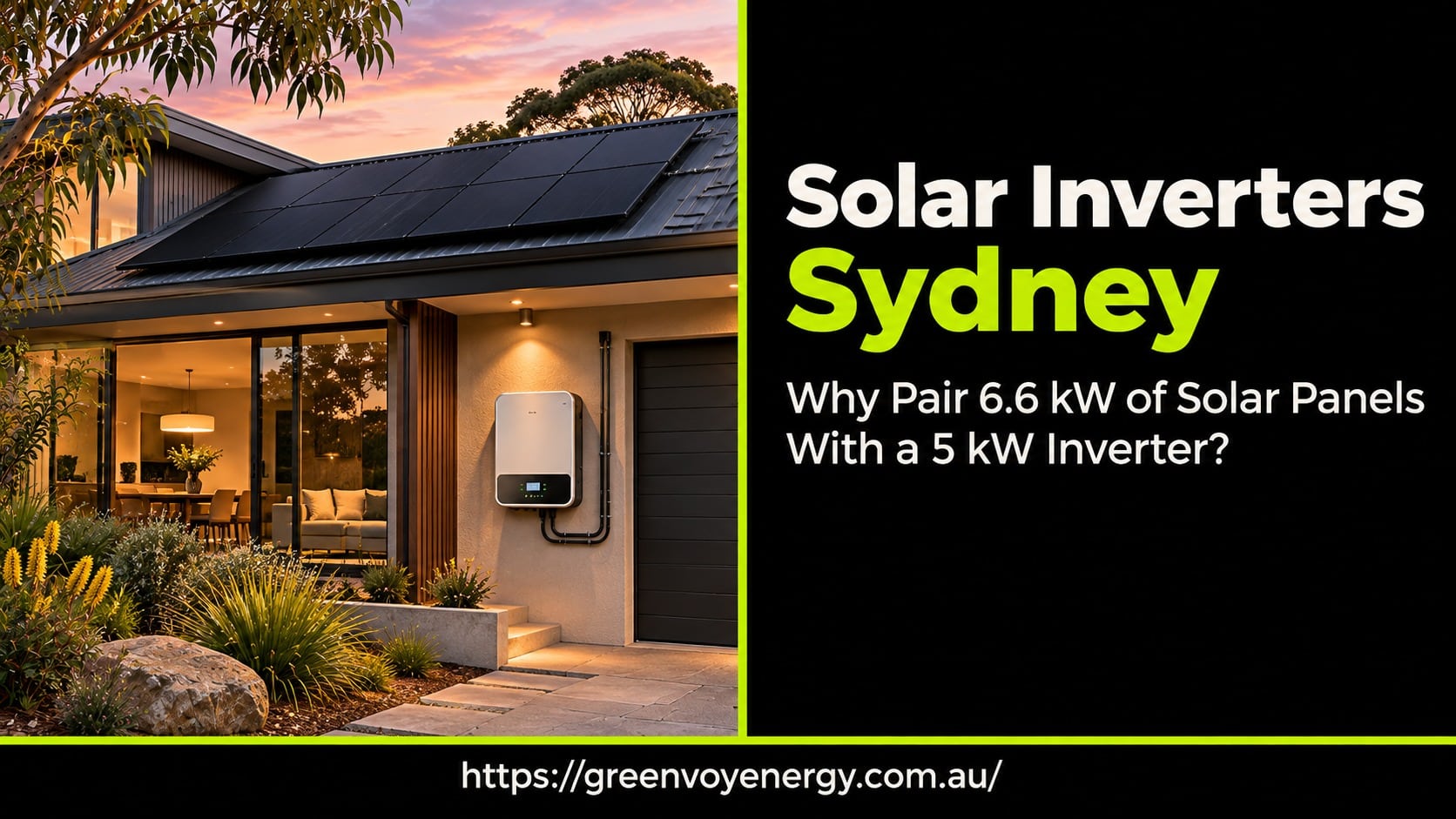
When Andrew started comparing solar quotes for his family home in Parramatta, one detail immediately caught his attention. The proposal included 6.6 kW of rooftop solar panels, but the inverter was rated at only 5 kW. He wondered whether the installer had selected equipment that was too small.
It seemed odd. Why would anyone install panels capable of producing more electricity than the inverter could handle? Surely a larger inverter would make better use of the sunshine.
Andrew is an illustrative homeowner, but his confusion is familiar to people researching Solar Inverters Sydney. In fact, pairing 6.6 kW of panels with a 5 kW inverter is a common Australian solar configuration. The combination can provide good energy production without necessarily requiring a larger inverter.
At Greenvoy Energy, Sydney homeowners can explore solar panel and inverter solutions suited to their electricity consumption, roof layout and future energy requirements. Understanding why these components are paired makes comparing installation quotes much easier.
Why Do 6.6 kW Solar Systems Use 5 kW Inverters?
The answer begins with how solar panels produce electricity throughout the day.
A 6.6 kW solar array has a combined rated capacity of 6.6 kilowatts under standard testing conditions. However, panels rarely operate at their maximum rated output continuously in real-world conditions.
Cloud cover, roof orientation, temperature and changing sunlight all influence generation. Even on a clear Sydney afternoon, the amount of electricity produced varies throughout the day. A 5 kW inverter can therefore be a practical match because the panels frequently generate less than their combined rating.
Greenvoy Energy can help homeowners understand how the selected inverter capacity relates to expected solar generation rather than relying on equipment ratings alone.
Understanding the Difference Between kW and kWh
Before choosing an inverter, it’s worth understanding two measurements that often cause confusion. Kilowatts (kW) describe power capacity at a particular moment. Kilowatt-hours (kWh) measure the amount of electricity generated or consumed over time.
For example, a 5 kW inverter operating at an AC output of 5 kW for one hour would deliver approximately 5 kWh of electricity.But solar generation isn’t constant. A system may produce less electricity early in the morning, increase its output around midday and gradually reduce generation towards sunset.
For homeowners comparing solar inverter sizes in Sydney, this distinction explains why a 5 kW inverter doesn’t limit daily electricity production to 5 kWh. It limits instantaneous output according to its rated capabilities.
What Is Solar Inverter Oversizing?
Solar inverter oversizing refers to installing a solar panel array with a higher rated capacity than the inverter’s AC output rating. It’s also called DC oversizing because solar panels generate direct current electricity.
Andrew’s proposed 6.6 kW array paired with a 5 kW inverter represents a DC-to-AC ratio of 1.32, or 132%. Australian solar design guidance recognises this type of configuration, although the permitted ratio depends on equipment specifications, installation requirements and applicable incentive rules.
For Solar Inverters Sydney, oversizing should be a deliberate design decision rather than an excuse to install unsuitable equipment.
Explore Greenvoy Energy’s solar inverter solutions when comparing proposed inverter specifications, manufacturer limits and system compatibility.
Will a 5 kW Inverter Waste Solar Electricity?
This was Andrew’s biggest concern. If his panels could theoretically produce 6.6 kW, wouldn’t a 5 kW inverter waste the difference?
Under strong sunlight, the solar array may occasionally produce more DC power than the inverter can convert into AC electricity. When that happens, the inverter limits its output. This is commonly called solar inverter clipping.
However, clipping doesn’t happen continuously. Panels spend much of their operating time producing below their rated maximum, so additional panel capacity can improve generation during mornings, afternoons and less favourable conditions.
The important question is how much annual energy might be lost through clipping compared with the extra electricity generated by the larger array.
Greenvoy Energy can discuss these considerations through a property-specific solar design and generation estimate.
Why More Solar Panels Can Improve Daily Generation
Imagine two Sydney homes with similar roof orientation. One has 5 kW of solar panels connected to a suitable 5 kW inverter. The other has 6.6 kW of panels connected to an inverter with the same AC rating.
The larger array may reach useful output earlier in the morning and maintain stronger generation later in the afternoon, depending on conditions.
This can provide more electricity across the day even when both systems have the same maximum inverter output. However, the benefits depend on installation design, sunlight exposure and household electricity usage.
Homeowners exploring Greenvoy Energy’s solar panel options should compare estimated annual generation and usable electricity rather than choosing panels or inverters based solely on their nameplate ratings.
Does Sydney’s Climate Affect Inverter Performance?
Sydney experiences warm summers, cooler winters and changing weather conditions that influence rooftop solar production.
Although bright sunshine supports generation, solar panels become less efficient as their operating temperature increases. A hot summer afternoon doesn’t necessarily produce the highest possible panel output.
During winter, shorter daylight hours and lower solar angles can reduce total daily generation. Roof orientation and shading also affect how much electricity reaches the inverter.
These seasonal differences help explain why an oversized solar array may be useful.
For homeowners researching Solar Inverters Sydney, Greenvoy Energy can discuss expected performance across different seasons, helping establish realistic electricity generation expectations.
Is a Bigger Inverter Always Better?
Not necessarily. A larger inverter can accommodate greater instantaneous AC output, but that doesn’t automatically mean it provides better financial value.
The appropriate inverter depends on panel capacity, household electricity consumption, network connection conditions and installation costs.
Andrew initially assumed upgrading from 5 kW to a larger inverter would always be worthwhile. After comparing the equipment, he realised that any additional generation needed to justify the extra expense.
Some households may benefit from a larger inverter, particularly where greater system capacity or different electrical requirements apply.
Ask Greenvoy Energy to explain the expected advantages of each proposed configuration rather than accepting a larger inverter simply because its rating sounds better.
What About Solar Export Limits in Sydney?
Another important consideration is the electricity network.
Sydney properties may fall within Ausgrid or Endeavour Energy’s distribution areas, depending on their location. Network approval and export conditions can influence the system design.
An inverter’s rated output and the amount of electricity permitted to flow back into the grid are not necessarily the same. For example, a property might have an export restriction even when its inverter is capable of producing more electricity for household use.
During solar inverter installation in Sydney, the proposed configuration must meet applicable network and electrical requirements.
Greenvoy Energy can help homeowners discuss the relationship between inverter sizing, household consumption and connection conditions before finalising their installation plans.
Should You Consider a Hybrid Inverter for Future Batteries?
While reviewing his solar proposal, Andrew also wondered whether his family might add battery storage later. A hybrid inverter can support compatible battery equipment, potentially providing a pathway towards future energy storage.
However, a standard solar inverter doesn’t automatically prevent battery installation. Some AC-coupled battery systems can operate alongside an existing suitable inverter.
Compatibility, installation costs and future electricity requirements should influence the decision.
Homeowners can explore Greenvoy Energy’s solar battery solutions alongside inverter options.
If battery storage is part of your long-term plan, discuss it before selecting the inverter rather than assuming every model will support the upgrade you eventually want.
How to Compare 6.6 kW Solar System Quotes
When Andrew returned to his installation quotes, he stopped comparing inverter sizes in isolation. Instead, he looked at the proposed panel models, inverter specifications, roof layout, estimated annual generation and complete installation cost.
He also wanted to understand warranty conditions, monitoring features and potential additional electrical work. For homeowners comparing Solar Inverters Sydney, a detailed quotation should explain why the proposed equipment suits the property and whether other configurations were considered.
Greenvoy Energy offers solar inverter and panel options that homeowners can assess alongside their electricity bills and future energy plans.
A suitable system should balance performance, affordability and realistic household requirements.
Final Thoughts: Choose the Right Inverter with Greenvoy Energy
Andrew eventually understood that his 5 kW inverter wasn’t necessarily undersized. The 6.6 kW solar array had been proposed to deliver useful generation throughout the day while operating within the inverter’s output capabilities.
For homeowners researching Solar Inverters Sydney, a 6.6 kW solar system paired with a 5 kW inverter can be a sensible configuration. However, roof conditions, inverter specifications, electricity usage and network requirements should always influence the final design.
At Greenvoy Energy, Sydney homeowners can explore solar inverter and panel solutions based on their property’s needs.
Request a solar quote from Greenvoy Energy to discuss inverter sizing, expected generation and a suitable solar installation for your home.
Frequently Asked Questions
Q1. Why is a 5 kW inverter used with 6.6 kW solar panels?
Because panels rarely operate continuously at their maximum rated output. A larger solar array can improve generation across the day while a suitable 5 kW inverter manages AC output.
Q2. Will a 5 kW inverter limit my solar generation?
It limits instantaneous AC output to its supported rating. Some generation may be lost through clipping during strong sunlight, although extra panels can increase total energy production.
Q3. Is a 6.6 kW solar system with a 5 kW inverter allowed in Australia?
This is a common configuration, but the precise installation must satisfy manufacturer specifications, applicable design standards, network requirements and incentive eligibility conditions.
Q4. Should I choose a larger inverter for my Sydney home?
It depends on panel capacity, household electricity usage, future plans and connection conditions. A larger inverter isn’t automatically more economical.
Q5. Can Greenvoy Energy help me choose the correct inverter?
Yes. Greenvoy Energy offers solar inverter and panel solutions for Sydney homeowners and can discuss suitable system configurations based on property details and electricity requirements.



Leave a comment