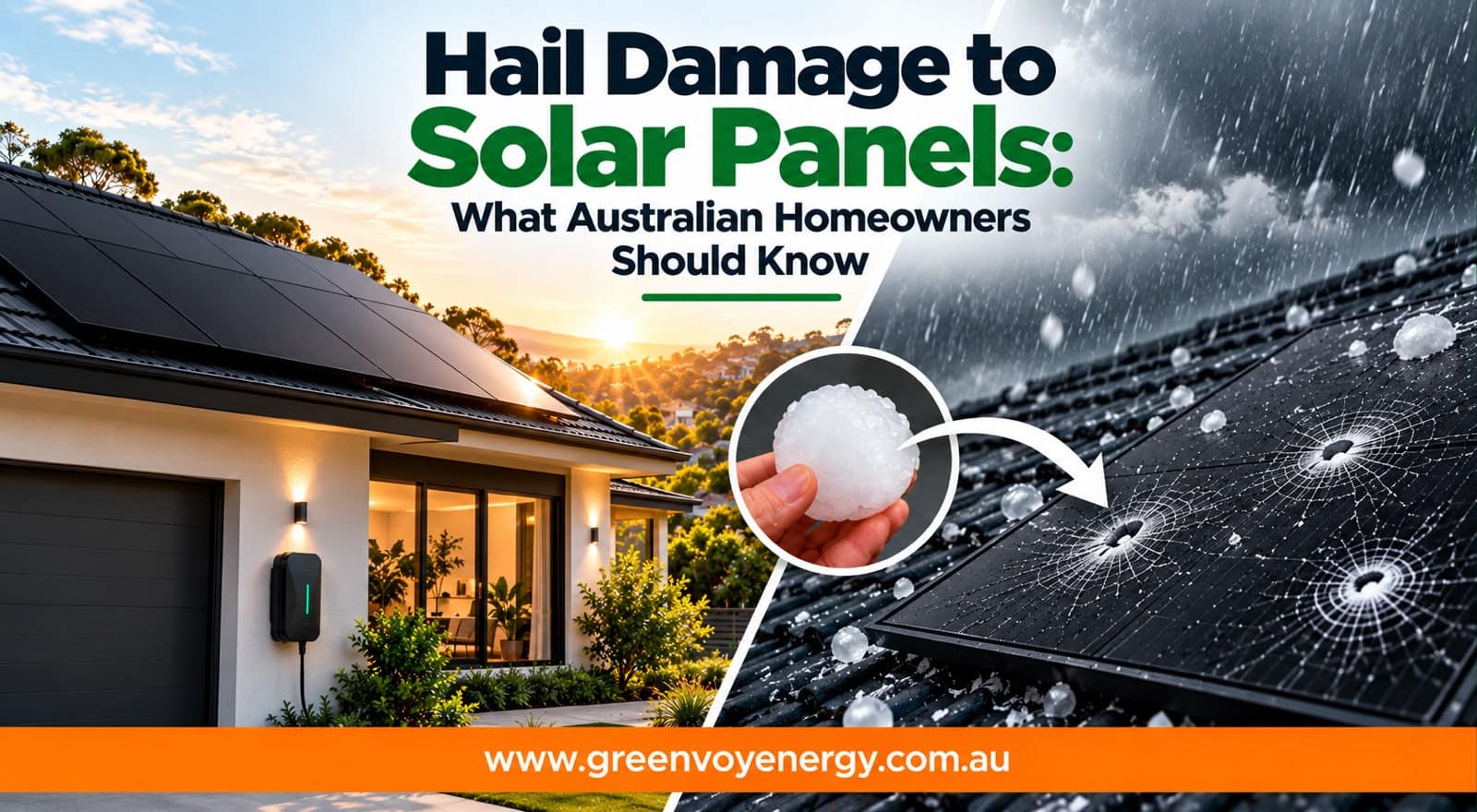
You wake up after a rough night of weather and notice hail scattered around the garden, driveway and roof. Naturally, if you have solar panels installed, one of the first thoughts is, “Did the hail damage my solar panels?”
It is a reasonable concern for Australian homeowners. Solar panels are built to live outdoors and are tested against hail impact, but that does not mean they are completely immune to severe storms. Very large or intense hail can still cause cracks, impact damage or less obvious problems beneath the panel surface.
At Greenvoy Energy, we believe solar ownership is about much more than installation day. Looking after the system, understanding its performance and knowing what to do after extreme weather can make a real difference over the life of your solar investment.
Can Hail Damage Solar Panels?
Yes, hail can damage solar panels, especially when the storm is severe. The front of a typical solar panel uses protective glass designed to withstand outdoor conditions, but even strong materials have their limits.
Modern PV modules are tested against defined hail-impact conditions as part of recognised standards. The Clean Energy Council requires listed PV modules to meet relevant IEC standards, including IEC 61215 and IEC 61730, which include testing related to hail impact. However, standard testing should not be confused with a guarantee that a panel will survive every hailstorm Australia can produce.
At Greenvoy Energy, the approach is to look at the actual condition and performance of the system after a major weather event rather than assuming that every storm has caused damage or that every panel is automatically fine.
Why Are Solar Panels Designed to Handle Hail?
Solar panels spend their entire working life outside, so weather resistance is a major part of their design. They need to cope with sunlight, rain, wind, heat, cold temperatures and, in some parts of Australia, severe hail.
The protective glass covering the solar cells is engineered to provide durability while still allowing sunlight to pass through efficiently. Under IEC 61215 testing, PV modules are subjected to controlled hail-impact testing that provides a baseline measure of impact resistance.
That is reassuring for homeowners, but it is still important to remember that hail comes in many different sizes and shapes. A panel that handles standard test conditions may still suffer damage in an unusually severe storm.
This is one reason Greenvoy Energy recommends thinking about panel quality, certification, system monitoring and ongoing maintenance as part of the overall solar investment.
What Does Hail Damage on Solar Panels Look Like?
The obvious signs are usually the easiest to understand. You may notice cracked glass, visible chips, impact marks or damage spread across one or more modules.
The problem is that not all hail damage to solar panels is immediately visible. A strong impact can sometimes create small cracks or electrical problems inside the panel without leaving dramatic damage that can easily be seen from the ground.
That is why solar production data can be useful after a serious storm. If your monitoring system suddenly shows lower generation than normal, especially immediately after the weather event, it is worth investigating rather than simply assuming the drop is caused by clouds or seasonal changes.
Greenvoy Energy can help homeowners look at both the physical condition and operating performance of a solar system when damage is suspected.
Can Hail Damage Solar Cells Without Breaking the Glass?
It is possible for internal damage to occur without the entire front surface looking shattered. Solar cells and their electrical connections sit beneath the protective layers of the module, so some faults can be difficult to identify with a quick visual inspection.
Small cracks in cells can affect current flow and reduce the performance of a panel. In some cases, the impact may not cause an immediate dramatic drop, which means the homeowner may only notice a performance issue later.
This is why looking at the system’s historical production can be useful. If your solar monitoring data shows a noticeable change after a major hail event, a professional assessment can help determine whether the weather is connected to the problem.
For Greenvoy Energy, this broader monitoring and maintenance approach is important because a solar system should be judged by both how it looks and how it performs.
What Should You Do After a Hailstorm?
The first thing to remember is simple: do not climb onto the roof just to inspect your panels. A wet roof can be slippery, while damaged solar equipment can create electrical hazards.
From the ground, you can safely look for obvious signs such as broken glass, unusual panel markings, loose-looking equipment or other visible problems. If you have a solar monitoring app or system, check whether production looks normal compared with previous days.
If you notice anything unusual, contact a qualified solar professional rather than trying to touch, move or repair the equipment yourself. A proper inspection can help identify whether the issue is cosmetic, electrical or something more serious.
If your Greenvoy Energy system has experienced severe weather, a professional solar repair or maintenance assessment can help establish the condition of the installation before further decisions are made.
Does Hail Damage Mean You Need New Solar Panels?
Not necessarily. One of the biggest mistakes homeowners can make after a storm is assuming that the entire solar system needs to be replaced.
The actual requirement depends on the extent of the damage. Some panels may remain completely unaffected while one or two modules have problems. In other cases, the storm may have affected other parts of the installation, such as wiring, mounting components or related electrical equipment.
A proper inspection should therefore come before any replacement decision. Greenvoy Energy can assess the broader system condition so homeowners have a clearer idea of whether repair, individual panel replacement or further work is actually required. The goal is to fix what needs fixing, not replace perfectly good equipment unnecessarily.
Hail Damage vs Normal Solar Panel Wear
Not every reduction in solar output is caused by hail. Solar systems can experience performance changes for many different reasons, including shading, dust, inverter faults, wiring problems, weather conditions and normal ageing.
This makes timing particularly useful.
If your system was performing normally and then shows an unusual drop immediately following a severe hailstorm, the weather event becomes an important factor to investigate. On the other hand, a gradual performance decline over a long period may point towards a completely different issue.
This is where proper solar monitoring and maintenance can help. Greenvoy Energy can approach the problem from a system-performance perspective rather than assuming every production issue is storm damage.
Are Solar Panels Covered by Home Insurance?
This is one question where homeowners should check their own policy instead of relying on a general answer. Insurance coverage can vary depending on the insurer, policy wording, excess, exclusions and the type of damage involved.
Some Australian insurers include permanently attached solar panels within building cover when hail is an insured event. However, homeowners should still review their Product Disclosure Statement and contact the insurer before assuming that a particular repair or replacement will be covered.
If a severe storm has damaged your system, take safe photographs where possible, keep relevant installation and purchase records and follow your insurer’s claims process.
Greenvoy Energy can assist with the solar system side of the assessment, while the insurer determines the coverage available under your individual policy.
Does Your Solar Panel Warranty Cover Hail Damage?
A warranty is not the same thing as insurance, and this distinction matters after a hailstorm.
Solar panel manufacturers typically provide product warranties with their own terms and exclusions. The installer may also provide a separate workmanship warranty covering installation-related issues.
Storm damage can be treated differently from a manufacturing defect or an installation problem. That means homeowners should check both the panel manufacturer’s warranty and the installer’s warranty rather than assuming one automatically covers hail.
Greenvoy Energy’s published warranty information outlines separate product and workmanship warranty processes, so understanding which type of issue you are dealing with is important before making a claim.
How Can You Reduce Hail Risk When Choosing Solar Panels?
You cannot control the weather, but you can make informed choices when selecting your solar equipment. Panel quality, certification, manufacturer information and installation standards are all worth considering.
The Clean Energy Council maintains an approved PV module list, and eligible modules must meet relevant Australian and international standards. Homeowners in areas that experience severe hail may also want to ask their installer whether a particular panel manufacturer carries out additional hail-impact testing beyond the basic certification requirements.
When Greenvoy Energy helps homeowners plan solar systems, the conversation should not stop with price and output. Durability, product quality and long-term system performance are also part of creating a sensible solar investment.
What About the Rest of Your Solar System?
When people think about hail damage to solar panels, they usually focus on the modules because they are the most visible part of the installation.
But a solar system includes much more than panels. The inverter, mounting structure, cabling, isolators and other electrical components all play important roles in keeping the system operating correctly.
A severe storm can therefore justify checking the complete installation rather than only looking for broken glass. Greenvoy Energy also provides solar repair and maintenance services, which can be valuable when homeowners need a broader post-storm assessment.
Looking at the whole system can sometimes reveal issues that are not obvious from a quick visual inspection of the panels.
When Should You Call a Solar Professional?
You do not need to wait until a panel is visibly shattered before asking for help. If you notice cracked glass, sudden changes in solar production, inverter warnings, strange system behaviour or visible movement around the array, it is worth arranging an inspection.
It is especially important not to attempt repairs yourself. Solar panels can generate electricity whenever they are exposed to light, and electrical and rooftop work should be handled using appropriate safety procedures and qualifications.
For homeowners in Sydney and surrounding areas, Greenvoy Energy offers solar repair and maintenance services that can help investigate storm-related issues and determine what action may actually be required.
Why Hail Resistance Should Be Part of Your Solar Decision
When buying solar, homeowners often focus heavily on panel efficiency, system size, expected savings and upfront price. Those are all important, but the physical durability of the equipment deserves attention too.
Australia’s weather can be unpredictable, and severe storms can put outdoor equipment under significant stress. Understanding the panel’s certification, manufacturer testing, warranty conditions and the quality of the installation gives you a more realistic picture of what you are buying.
At Greenvoy Energy, the focus is on creating solar systems for long-term use rather than treating installation as the end of the story. Good equipment, sensible installation and ongoing maintenance all contribute to a healthier solar investment.
Greenvoy Energy and Solar System Support
A solar system is a long-term investment, and extreme weather is simply one of the situations homeowners may have to deal with during its life.
That is why having access to professional solar advice matters. Whether the concern is hail damage, reduced system output, inverter issues or general maintenance, understanding the actual condition of the system can help you make a better decision.
Greenvoy Energy works across solar panels, battery systems, repair and maintenance, helping homeowners look at the complete energy setup instead of focusing on a single component.
If your solar system has been through a serious hailstorm, getting the right assessment can save you from unnecessary replacement costs and, just as importantly, help identify problems before they become larger ones.
Final Thoughts
Hail damage to solar panels is a concern worth taking seriously, but homeowners do not need to panic after every storm. Modern solar modules are tested against defined hail-impact conditions and are built to withstand normal outdoor exposure.
At the same time, severe hail can still cause damage, especially when the storm is more intense than the conditions covered by standard testing. Visible cracks are one warning sign, but reduced energy production can also be an important clue.
After a serious hail event, avoid climbing onto the roof yourself. Check your solar monitoring data, look for obvious signs from a safe position and contact a qualified professional when something appears unusual.
With Greenvoy Energy, homeowners can take a wider view of the problem, including the condition of the panels, inverter, wiring, mounting equipment and overall solar performance.
Choosing quality equipment, understanding your warranty and insurance, monitoring system performance and arranging professional maintenance when needed can all help protect your solar investment for the long term.
Frequently Asked Questions
Q1. Can hail damage solar panels?
Yes. Solar panels are tested to withstand defined levels of hail impact, but very severe hail can still cause cracked glass, internal cell damage or other faults.
Q2. Are solar panels completely hail-proof?
No. Quality panels are designed and tested for hail resistance, but no solar panel should be considered completely immune to extreme weather or unusually severe hail.
Q3. How can I tell if hail damaged my solar panels?
Look for visible cracks or impact marks from a safe position and check your solar monitoring data for unusual changes in production. A professional inspection is recommended when damage is suspected.
Q4. Should I climb onto the roof after a hailstorm?
No. Wet or damaged roofs can be dangerous, and solar equipment can present electrical risks. Inspect from the ground where possible and contact a qualified solar professional.
Q5. Will home insurance cover hail damage to solar panels?
It depends on your individual policy and insurer. Some Australian home insurance policies cover permanently attached solar panels for insured hail events, but homeowners should check their policy terms before making assumptions.
Q6. Does a solar panel warranty cover hail damage?
Not automatically. Manufacturer product warranties and installer workmanship warranties have different conditions, and storm damage may be treated differently from manufacturing faults or installation defects.
Q7. Do I need to replace all my solar panels after a hailstorm?
No, not necessarily. The extent of the damage needs to be assessed first, and in some cases only individual panels or specific components may require repair or replacement.
Q8. Can hail damage the solar inverter too?
Severe weather can potentially affect other parts of a solar installation, not just the panels. If you notice inverter warnings or unusual system behaviour after a storm, a professional inspection is recommended.
Q9. Can Greenvoy Energy help with hail-damaged solar systems?
Yes. Greenvoy Energy provides solar repair and maintenance services and can help assess the condition of a solar and battery system when storm-related damage or performance issues are suspected.
Leave a comment